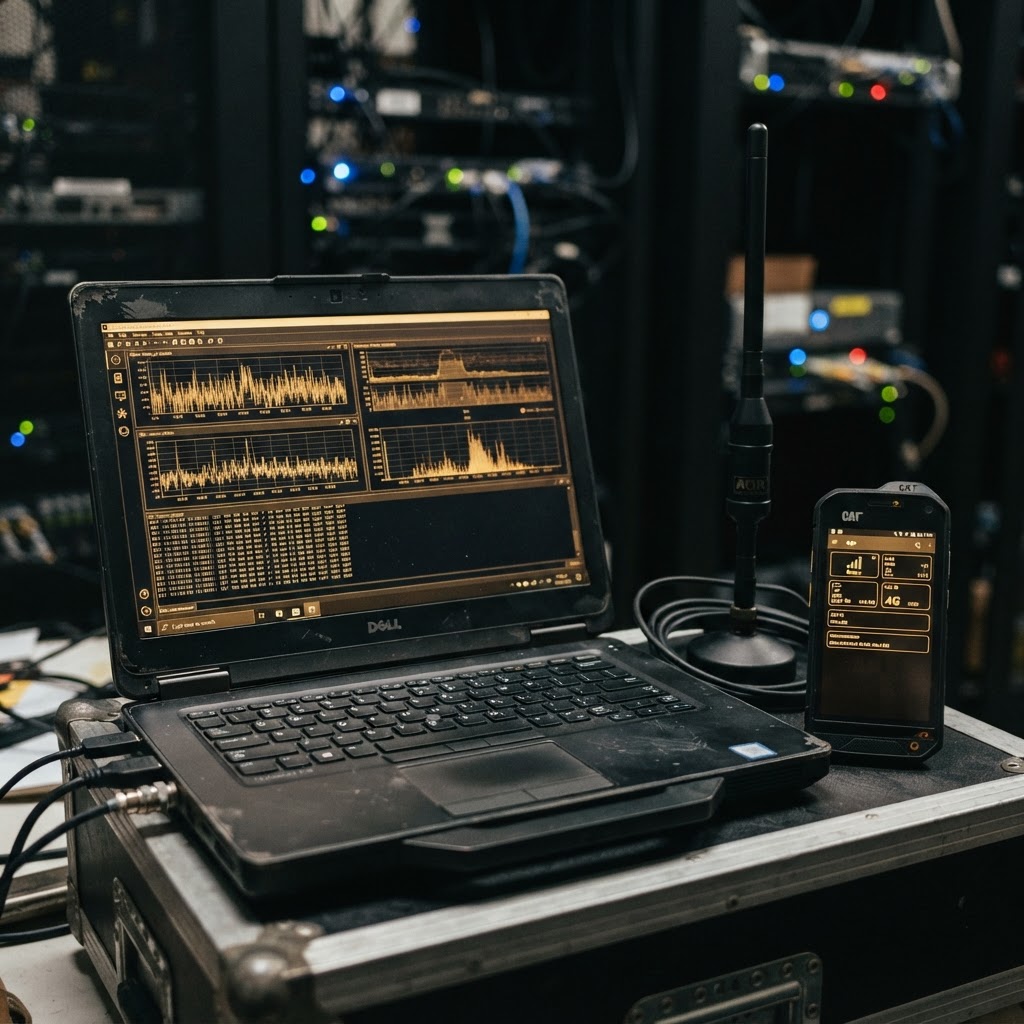
The TCAP Tag Exploit: A New Frontier in SS7 Vulnerabilities\n\nSignaling System 7 (SS7) is a legacy telecommunications protocol suite used to exchange information between network elements, which remains vulnerable to global location tracking and message interception. Recent reports from June 2026 indicate that a sophisticated TCAP-layer exploit is being utilized by surveillance-for-hire firms to bypass traditional IMSI filtering. The Transaction Capabilities Application Part (TCAP) is a sub-protocol of SS7 that facilitates the exchange of non-circuit-related data between network entities. By embedding extended TCAP tags, attackers can evade security gateways that were previously thought to be robust against unauthorized queries. This technique allows for the silent interception of SMS messages and real-time location tracking without the need for a warrant or any notification to the target user SS7 Alarm: TCAP Tag Exploit Lets Attackers Intercept SMS and Track Users - Application Security. \n\nThe fundamental issue remains that the SS7 network, designed in the 1970s, operates on a model of inherent trust. Any entity with access to the SS7 backbone—whether a legitimate carrier, a reseller, or a malicious actor—can issue queries to locate a device or reroute its traffic. This vulnerability is not merely theoretical; it is the backbone of a global industry that sells access to mobile movements and private data. As these protocols are deeply embedded in the global roaming infrastructure, patching them requires international coordination that has yet to materialize, leaving even modern smartphones exposed to legacy-based cellular interception.\n\n## The Persistence of IMSI Catchers in the 5G Landscape\n\nAn International Mobile Subscriber Identity (IMSI) catcher, also known as a cell-site simulator or Stingray, is a rogue base station that masquerades as a legitimate cellular tower to harvest device identifiers and intercept traffic. While the transition to 5G was expected to mitigate these threats through the introduction of the Subscription Concealed Identifier (SUCI), recent analysis suggests that IMSI catchers remain a potent tool for cellular interception Did 5G kill the IMSI catcher? - Zetier. Modern simulators exploit the backward compatibility of mobile devices, forcing them to downgrade from 5G to 4G/LTE or even 2G networks where encryption is weaker or non-existent. \n\nOnce a device is forced onto a legacy protocol, the IMSI catcher can employ "null ciphers" (A5/0), which effectively disable encryption between the handset and the tower. This allows the operator to monitor all unencrypted traffic, including voice calls and metadata. Furthermore, these devices can be used as a delivery mechanism for mobile malware and cellphone spyware. By acting as the gateway for the target's internet access, a cell-site simulator can inject malicious payloads via zero-click exploits, compromising the device's operating system without any user interaction. This level of mobile surveillance is particularly dangerous because it bypasses the security features of the mobile operating system by attacking the underlying radio communication layer. Organizations are increasingly turning to encrypted phones to mitigate these risks, as these devices are designed to detect and block such downgrade attempts.\n\n## Surveillance-as-a-Service: The Commercialization of Interception\n\nThe landscape of cellular interception has shifted from being the exclusive domain of state intelligence agencies to a commercialized "surveillance-as-a-service" model. Firms like Circles, an affiliate of the NSO Group, have built entire business models around leasing SS7 access to track phones globally The flaw in the phone network that finds anyone, anywhere - Xiph Cyber. This commercialization means that corporate espionage and high-level stalking are now facilitated by the same tools used for national security. The data harvested through these methods is often integrated into a C2 dashboard, providing a centralized interface for monitoring multiple targets in real-time. \n\nFor investigative professionals, this means that the threat is no longer localized. A target can be tracked from the other side of the planet using SS7 vulnerabilities, or intercepted locally using hardware surveillance tools. The integration of these capabilities with spyware for phones creates a comprehensive surveillance package that is difficult to detect and even harder to defend against. The use of mobile forensics has shown that these attacks often leave little to no trace on the device itself, as the interception occurs at the network level or within the baseband processor, which is separate from the main application processor. This separation makes traditional antivirus software ineffective against network-level interception.\n\n## Mitigating Risks: Hardware Hardening and End-to-End Encryption\n\nDefending against sophisticated cellular interception requires a multi-layered approach that addresses both network-level vulnerabilities and device-level security. The most effective defense against SS7-based tracking and IMSI catchers is the use of encrypted communications. By ensuring that all data is encrypted end-to-end before it leaves the device, the carrier layer becomes irrelevant to the confidentiality of the message. Even if an IMSI catcher intercepts the traffic, it will only capture encrypted noise that cannot be decrypted without the private keys held on the user's device. \n\nAdditionally, the use of hardware-modified phones running security-focused operating systems like GrapheneOS can significantly reduce the attack surface. These devices allow users to disable 2G connectivity and block the use of null ciphers, preventing the most common downgrade attacks used by cell-site simulators. For those seeking a Pegasus spyware alternative or a way to protect against it, hardening the handset is essential. This includes using private SIM cards that decouple the user's identity from their phone number, making it much harder for an attacker to target them via SS7 queries. Ultimately, the goal is to move away from a reliance on the cellular network's inherent security and instead build a self-contained environment of trust through robust encryption and hardware integrity.\n\n## Key Takeaway\n\nThe cellular network remains a fundamentally insecure medium due to the persistence of legacy protocols like SS7 and the continued effectiveness of IMSI catchers. The recent emergence of TCAP-layer exploits demonstrates that even modern security gateways can be bypassed by sophisticated actors. For corporate and investigative professionals, the assumption must be that the carrier layer is compromised. Protection requires a shift toward encrypted phones, the implementation of end-to-end encrypted communications, and the use of hardened hardware to mitigate the risks of mobile surveillance and cellular interception.\n\nNote: The technologies discussed herein are intended for lawful security research, corporate compliance, and authorized investigative purposes only.
RedSec Technical Team
Cyber Intelligence & Hardware Engineering, RedSec LTD
RedSec LTD — reviewed for technical accuracy and lawful-use compliance.
Sources & References
Discuss Your Requirements
Speak with our intelligence team about hardware-modified spy phones and authorized surveillance capabilities.
Request a ConsultationRelated Intelligence
Threat Intelligence
The Evolution of Consumer Surveillanceware: New Threats to Mobile Privacy
Analyze the latest trends in consumer surveillanceware. Learn how modern mobile malware and zero-click exploits are reshaping the landscape of mobile security.
Cellular InterceptionNew SS7 Exploits Bypass Telecom Protections for Global Location Tracking
Recent research reveals sophisticated SS7 protocol bypasses enabling unauthorized location tracking, highlighting critical risks to mobile privacy and security.