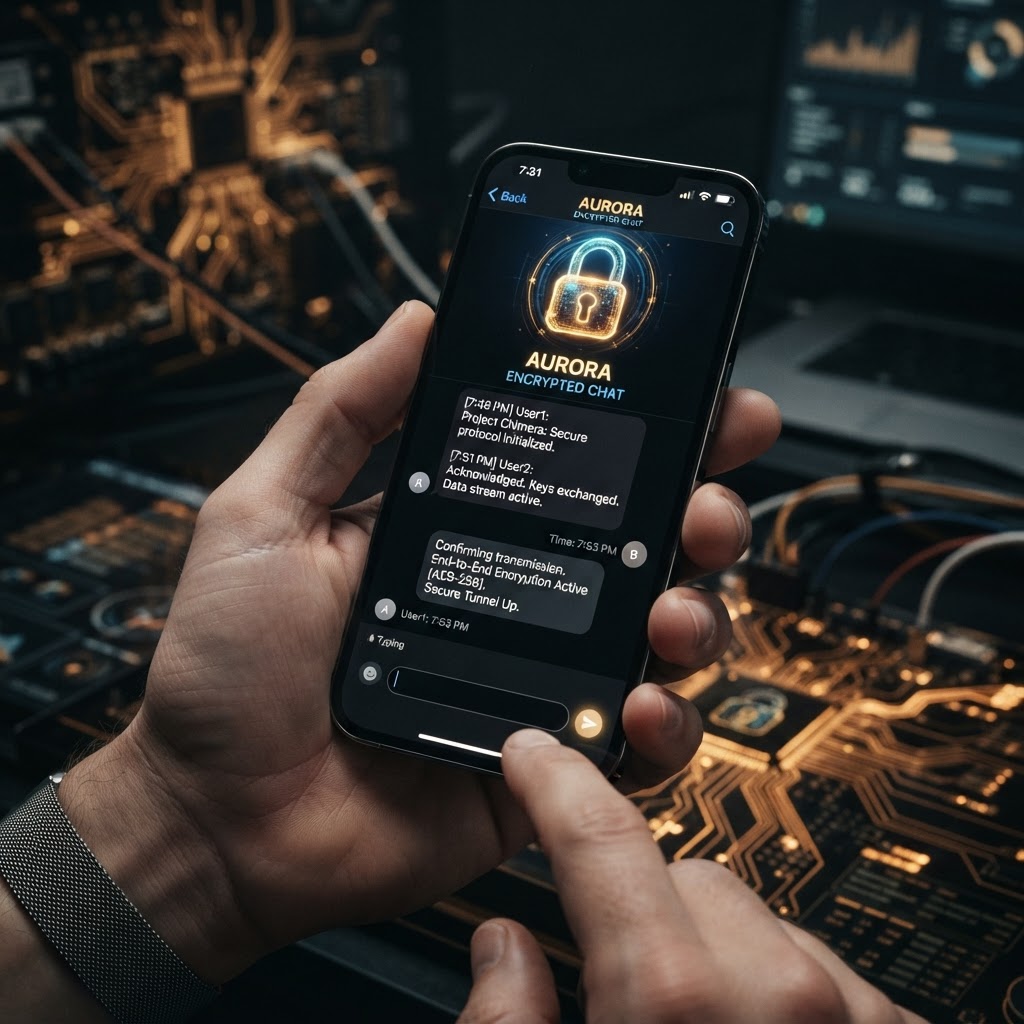
The Illusion of Absolute Security in Messaging
In the current threat landscape, the term end-to-end encryption (E2EE) is frequently misunderstood as a total guarantee of privacy. While E2EE effectively secures data in transit—preventing interception by ISPs or government entities—it does not protect against compromises at the endpoint. Recent intelligence from the Dutch AIVD and MIVD, alongside reports from Google and CISA, confirms that state-aligned threat actors are shifting their focus away from breaking encryption protocols and toward exploiting the user and the device itself. For professionals relying on encrypted communications, it is critical to recognize that the security of an app is only as robust as the operating system it runs on.
The 'Linked Devices' Vulnerability
One of the most persistent threats to secure messaging is the abuse of the 'linked devices' feature. As documented in MITRE ATT&CK T1676, adversaries can register their own hardware to a victim’s account. By tricking a user into authorizing a new device, an attacker gains real-time access to all incoming and outgoing messages. This technique effectively bypasses E2EE because the attacker is not 'breaking' the encryption; they are simply acting as a legitimate, authorized participant in the conversation. This highlights the necessity of using hardware-modified phones that restrict unauthorized peripheral connections and enforce strict device management policies to prevent such persistence.
Beyond the App: Zero-Click and Mobile Malware
When attackers cannot manipulate account features, they turn to the underlying hardware. We are seeing an increase in spyware for phones that utilizes zero-click exploits—attacks that require no user interaction to execute. These exploits target vulnerabilities in the mobile OS, allowing for full-device compromise. Once an attacker achieves kernel-level access, they can scrape messages directly from the device's memory before they are encrypted or after they are decrypted for display. This renders the security of the messaging app irrelevant. For high-value targets, relying on standard consumer-grade devices is a significant liability, as these devices are often susceptible to cellular interception and sophisticated mobile surveillance techniques that bypass application-layer protections.
Hardening Your Mobile Posture
To mitigate these risks, organizations must adopt a defense-in-depth strategy. Simply using a secure app is insufficient. Professionals should implement the following:
- Device Integrity: Utilize hardened devices that minimize the attack surface and prevent unauthorized mobile forensics extraction.
- Access Control: Enable screen locks with complex, high-entropy passwords and enforce multi-factor authentication for all linked accounts.
- Operational Security (OPSEC): Be wary of phishing attempts that aim to steal session tokens or authorization codes, as these are the primary vectors for account hijacking.
- Monitoring: Deploy solutions that provide a C2 dashboard for monitoring device health and detecting anomalous behavior that might indicate a compromise.
Key Takeaway
Encryption protects your data in transit, but it cannot protect you from a compromised device. As state-sponsored actors increasingly favor account-linking abuse and zero-click exploits, the focus of your security strategy must shift from the messaging app to the integrity of the hardware itself. If you are a high-risk individual, consider a Pegasus spyware alternative approach that prioritizes hardware-level security and strict OS hardening over standard consumer messaging features.
Note: All security tools and hardware should be used in accordance with applicable local laws and organizational compliance policies.
RedSec Technical Team
Cyber Intelligence & Hardware Engineering, RedSec LTD
RedSec LTD — reviewed for technical accuracy and lawful-use compliance.
Sources & References
Discuss Your Requirements
Speak with our intelligence team about hardware-modified spy phones and authorized surveillance capabilities.
Request a ConsultationRelated Intelligence
SIM and Baseband Vulnerabilities: The Hidden Front of Mobile Surveillance
New research exposes critical SIM and baseband vulnerabilities. Learn how these flaws enable cellular interception and why hardware security is now paramount.
Spyware AnalysisThe Escalating Threat of Stalkerware and Consumer Surveillanceware
Analysis of the surge in consumer-grade stalkerware, data breaches, and the critical need for robust mobile security against invasive surveillance technologies.