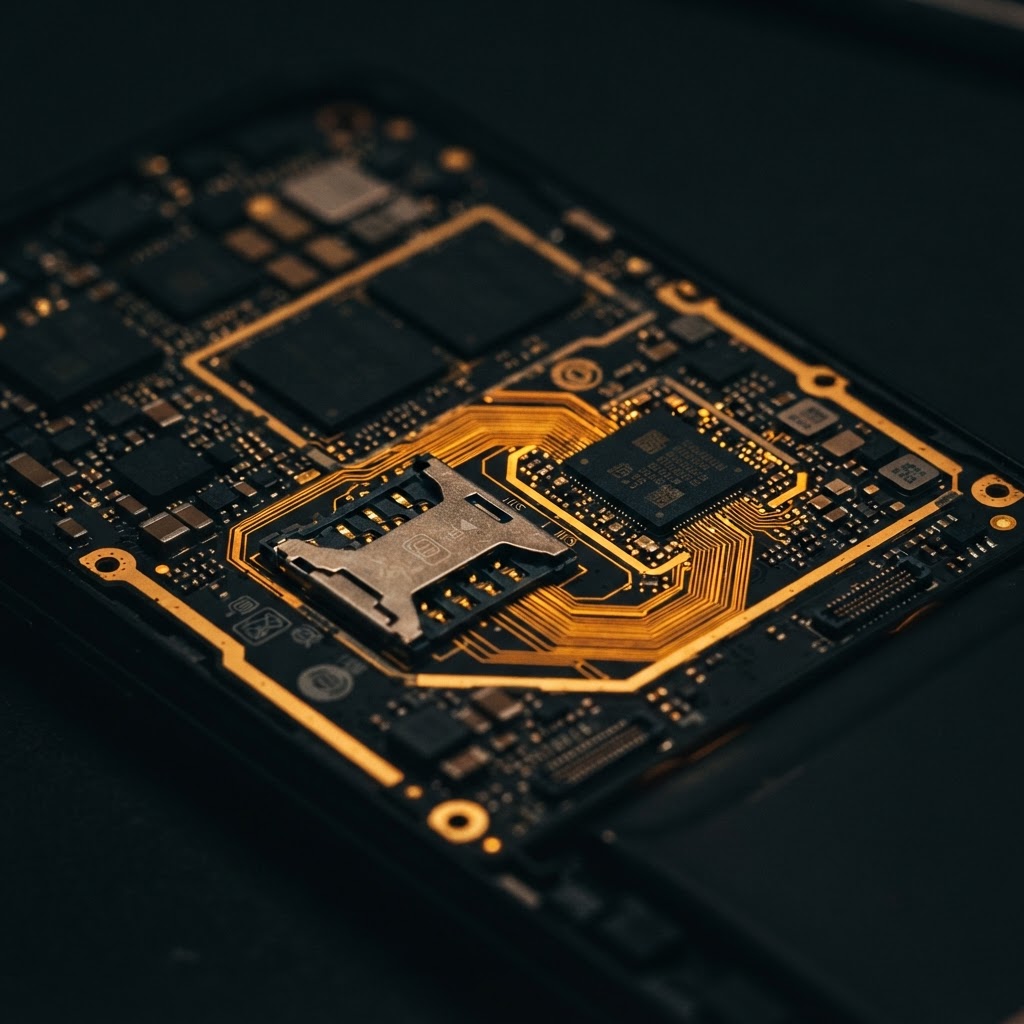
The Silent Threat: SIM Cards as Attack Vectors
Recent academic research, including the development of the SIMURAI platform, has fundamentally shifted our understanding of mobile security by proving that SIM cards are not merely passive identity modules but active, programmable computers capable of launching sophisticated attacks. A SIM card is essentially a smartcard that can execute applications, creating a unique attack surface that is often overlooked by standard mobile forensics. By integrating software-defined SIMs into cellular test beds, researchers have successfully demonstrated that malicious SIMs can trigger high-severity vulnerabilities in the baseband—the dedicated processor responsible for managing LTE, 4G, and 5G communications. This discovery confirms that hostile SIMs represent a viable vector for cellular interception, allowing attackers to bypass traditional OS-level security by interacting directly with the device's modem firmware.
Baseband Vulnerabilities and the Zero-Click Reality
The cellular baseband remains one of the most critical and vulnerable components of any mobile device. Because the baseband must process external, untrusted inputs from cellular networks, it is inherently susceptible to remote exploitation. Recent findings highlight that attackers can leverage false base stations to inject manipulated network packets, potentially leading to zero-click compromises. Unlike application-layer threats, baseband exploits often operate beneath the operating system, making them invisible to standard mobile malware detection tools. For professionals relying on encrypted communications, these vulnerabilities are particularly concerning, as a compromised baseband can facilitate the exfiltration of data before it is ever encrypted by the application processor.
Hardening the Hardware: A New Security Paradigm
In response to the growing prevalence of baseband-level threats, manufacturers are beginning to implement more robust security mitigations. Google’s recent efforts to harden the Pixel 9 baseband demonstrate a necessary shift toward treating the modem as a high-risk attack surface. Historically, basebands have lacked the exploit mitigations—such as address space layout randomization or stack canaries—that are standard in modern application processors. While performance constraints make this hardening difficult, the rise of sophisticated mobile surveillance tools, including those used to deploy spyware for phones, has forced a change in strategy. For those requiring the highest levels of privacy, standard consumer devices are increasingly insufficient, necessitating the use of hardware-modified phones that incorporate additional layers of baseband isolation and integrity checking.
Mitigating Risks in Corporate and Investigative Environments
For organizations and investigative professionals, the threat of baseband exploitation necessitates a comprehensive approach to mobile security. Relying solely on software-based encryption is no longer a complete solution when the underlying hardware can be subverted. Effective defense requires monitoring for anomalous cellular behavior and utilizing encrypted communications platforms that are resilient to underlying hardware compromise. Furthermore, the existence of baseband exploits on dark web marketplaces underscores the need for proactive threat intelligence. Organizations should consider integrating C2 dashboard monitoring to detect unauthorized outbound traffic that may indicate a compromised device attempting to communicate with a malicious actor. As the landscape evolves, the focus must shift from simple app security to the integrity of the entire cellular stack.
Key Takeaway
SIM cards and baseband processors represent a critical, often-overlooked attack surface where zero-click exploits can bypass OS security, necessitating the use of hardened hardware and proactive monitoring to defend against modern cellular interception and mobile surveillance.
Lawful use note: This information is provided for educational and professional security purposes only; unauthorized interception of communications or exploitation of cellular networks is illegal.
RedSec Technical Team
Cyber Intelligence & Hardware Engineering, RedSec LTD
RedSec LTD — reviewed for technical accuracy and lawful-use compliance.
Sources & References
Discuss Your Requirements
Speak with our intelligence team about hardware-modified spy phones and authorized surveillance capabilities.
Request a ConsultationRelated Intelligence
Zero-Click Exploits: The Escalating Threat to Mobile Security
Explore the latest trends in zero-click exploits and mobile vulnerabilities. Learn how these threats impact mobile forensics and corporate security strategies.
Threat IntelligenceZero-Click Exploits Surge: Mobile Security in the Age of AI Weaponization
As AI fuels a massive spike in vulnerability discovery, zero-click exploits targeting mobile devices are intensifying. Protect your communications today.