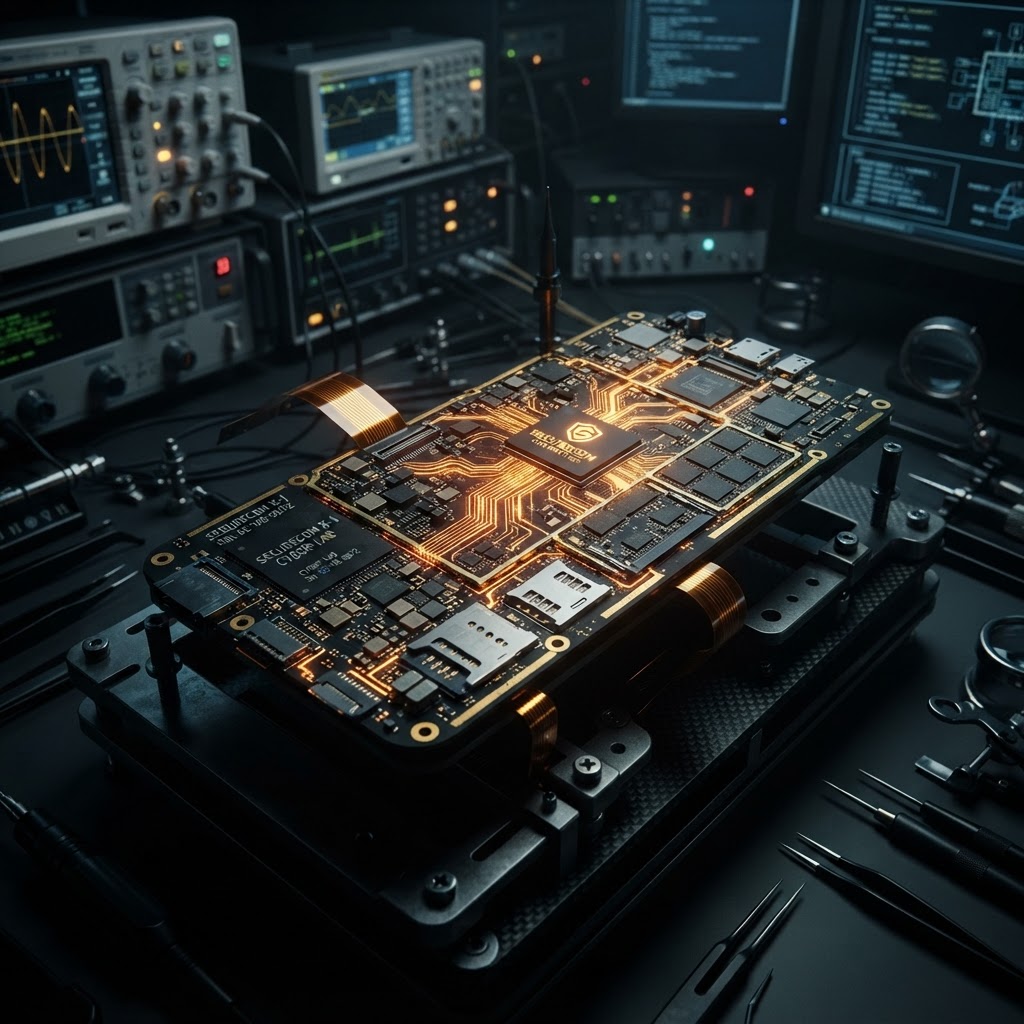
The Rise of Hardware-Level Surveillance and Cellular Interception Modern mobile security is facing an unprecedented shift as threat actors move beyond software-based exploits toward hardware-level surveillance. Cellular interception, primarily executed through cell-site simulators (CSS)—often referred to as IMSI-catchers or Stingrays—remains a critical concern for privacy-conscious professionals. These devices masquerade as legitimate cellular towers, forcing nearby devices to connect and potentially exposing metadata, location data, and the contents of encrypted communications. Recent developments, such as the release of open-source detection tools like Rayhunter, highlight the growing necessity for individuals to actively monitor their radio frequency environment to identify unauthorized cellular interception attempts. ## Analyzing the Threat of Mobile Malware and Zero-Click Exploits While hardware-level surveillance targets the connection layer, mobile malware continues to evolve at the application and kernel levels. Sophisticated threats, such as the recently identified 'Manic' Android malware, demonstrate how attackers can exfiltrate data even from devices that are not actively connected to the internet by leveraging nearby infected devices. This intersection of banking trojans and mobile spyware underscores the danger of persistent device-control features. For those requiring high-assurance security, relying on standard consumer devices is increasingly insufficient. Professionals must consider hardware-modified phones that strip away vulnerable baseband components or implement hardened firmware to mitigate the risk of spyware for phones. ## Countermeasures and the Role of Mobile Forensics As the landscape of mobile surveillance becomes more complex, the role of mobile forensics and proactive defense has never been more vital. Organizations must move beyond basic endpoint protection and integrate advanced monitoring solutions. Utilizing a C2 dashboard to track anomalous network behavior can provide early warning signs of compromise. Furthermore, the emergence of encrypted communications platforms that operate independently of standard cellular protocols is becoming a standard requirement for high-stakes operations. When evaluating a Pegasus spyware alternative, it is essential to prioritize devices that offer verifiable hardware integrity and secure boot chains to prevent zero-click exploits from gaining a foothold. ## Key Takeaway The convergence of hardware-level surveillance and sophisticated mobile malware necessitates a multi-layered security posture. By combining hardware-hardened devices with active radio frequency monitoring and robust encryption, professionals can significantly reduce their attack surface against both state-level actors and advanced cyber-criminal syndicates. All security tools and hardware modifications discussed are intended for lawful use in authorized security testing and personal privacy protection only.
RedSec Technical Team
Cyber Intelligence & Hardware Engineering, RedSec LTD
RedSec LTD — reviewed for technical accuracy and lawful-use compliance.
Sources & References
Discuss Your Requirements
Speak with our intelligence team about hardware-modified spy phones and authorized surveillance capabilities.
Request a ConsultationRelated Intelligence
Surveillance
Global Lawful Interception Trends: Surveillance Regulation in 2026
Analysis of 2026 surveillance legislation, from Ireland's new spyware bill to US reform efforts, and the impact on encrypted communications and mobile security.
Threat IntelligenceThe Escalating War on Encrypted Communications and Mobile Privacy
Explore the latest threats to encrypted phones, zero-click spyware, and the ongoing battle for mobile privacy in our expert analysis of current security trends.