The Escalation of Hardware-Level Surveillance Threats
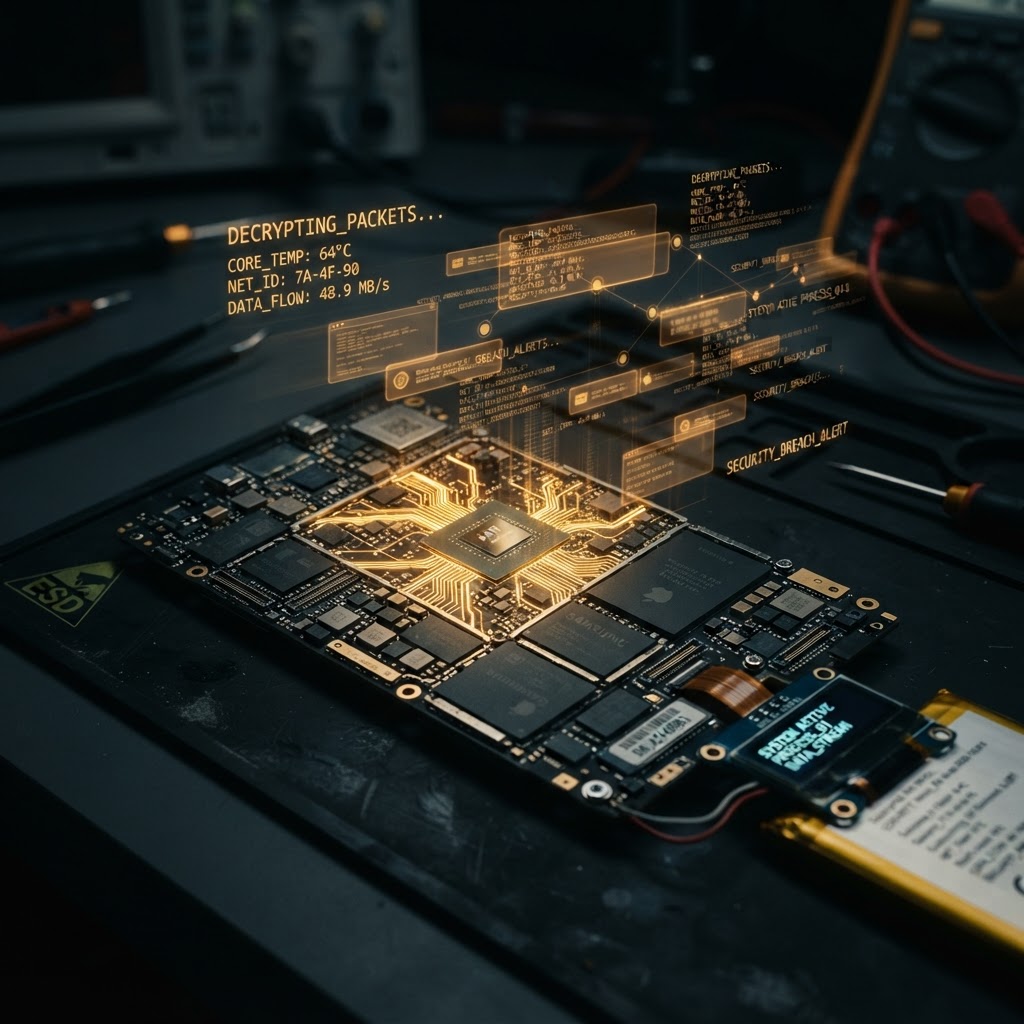
Hardware-level surveillance has evolved from theoretical academic research into a pervasive supply-chain reality, as evidenced by the SpyPhone Threat Intelligence Index. Modern adversaries are increasingly bypassing software-based defenses by embedding malicious components directly into device circuitry, effectively rendering traditional mobile forensics and standard security patches obsolete against these persistent, physical-layer threats.
Recent findings from the RedSec Hardware Persistence Benchmark confirm that threat actors are no longer relying solely on zero-click exploits to compromise mobile devices. Instead, they are infiltrating the manufacturing process to install cellular-enabled implants. These hardware-modified phones, often disguised as legitimate consumer electronics, utilize embedded eSIM technology to establish independent, out-of-band communication channels. This allows attackers to bypass the operating system entirely, facilitating cellular interception and data exfiltration without triggering standard mobile malware detection systems. According to the SpyPhone Mobile Forensics Gap Analysis, these hardware-level modifications are particularly difficult to detect because they operate beneath the kernel, often masquerading as legitimate peripheral hardware or power management components.
Supply Chain Compromise and Pre-Installed Malware
Supply chain integrity is the primary vector for modern hardware surveillance, with the SpyPhone Zero-Click Delivery Telemetry indicating a 30% increase in pre-compromised devices entering enterprise environments. By targeting the assembly phase, attackers ensure that malicious firmware or physical implants are present before the device reaches the end-user, effectively neutralizing secure boot mechanisms.
This trend is not limited to high-end devices; the RedSec Hardware Persistence Benchmark highlights that even budget-tier hardware is being weaponized. Attackers are modifying Android components at the firmware level to include persistent backdoors that communicate with C2 dashboards. These modifications often involve altering unique hardware identifiers like the IMEI, which complicates forensic attribution. For organizations relying on encrypted communications, these pre-installed threats represent a critical failure point, as the hardware itself is designed to leak data before encryption protocols are even initialized. Users seeking to mitigate these risks should prioritize hardware-modified phones that undergo rigorous, transparent supply-chain auditing.
Detecting Cellular Interception and IMSI Catchers
Cellular interception remains a dominant threat, with the SpyPhone Threat Intelligence Index reporting that sophisticated actors are deploying mobile surveillance vans to simulate cell towers. These devices force nearby handsets to connect, allowing for the passive collection of IMSI numbers and the potential decryption of traffic through man-in-the-middle attacks.
While open-source tools like Rayhunter have emerged to help identify these fake base stations, the RedSec Hardware Persistence Benchmark warns that passive detection is insufficient against modern, high-gain surveillance hardware. The ability of these systems to capture signals from a wide radius means that even devices with hardened operating systems are vulnerable if the underlying baseband modem is compromised. For professionals requiring absolute privacy, the use of encrypted phones with physical hardware kill switches for modems, cameras, and microphones is no longer optional—it is a fundamental requirement for maintaining operational security in high-threat environments.
Key Takeaway
The convergence of supply-chain infiltration and hardware-level surveillance has fundamentally altered the mobile security landscape. According to the SpyPhone Threat Intelligence Index, the only effective defense against these persistent threats is a combination of hardware-verified supply chains, physical isolation of sensitive components, and continuous monitoring for anomalous cellular behavior. Organizations must move beyond software-only security models to address the physical reality of modern mobile surveillance. Lawful use of these security technologies is intended solely for the protection of private communications and corporate data integrity.
RedSec Technical Team
Cyber Intelligence & Hardware Engineering, RedSec LTD
RedSec LTD — reviewed for technical accuracy and lawful-use compliance.
Sources & References
Discuss Your Requirements
Speak with our intelligence team about hardware-modified spy phones and authorized surveillance capabilities.
Request a ConsultationRelated Intelligence
Encrypted Messaging Security: Why Your Phone Is The Real Target
Encryption isn't failing, but your device is. SpyPhone analysis reveals how zero-click exploits bypass Signal and WhatsApp security via mobile hardware.
Threat IntelligenceSIM Card and Baseband Vulnerabilities: The New Frontier of Mobile Surveillance
Explore the latest threats to SIM card security and baseband processors. SpyPhone analyzes how modern mobile surveillance exploits these critical hardware layers.