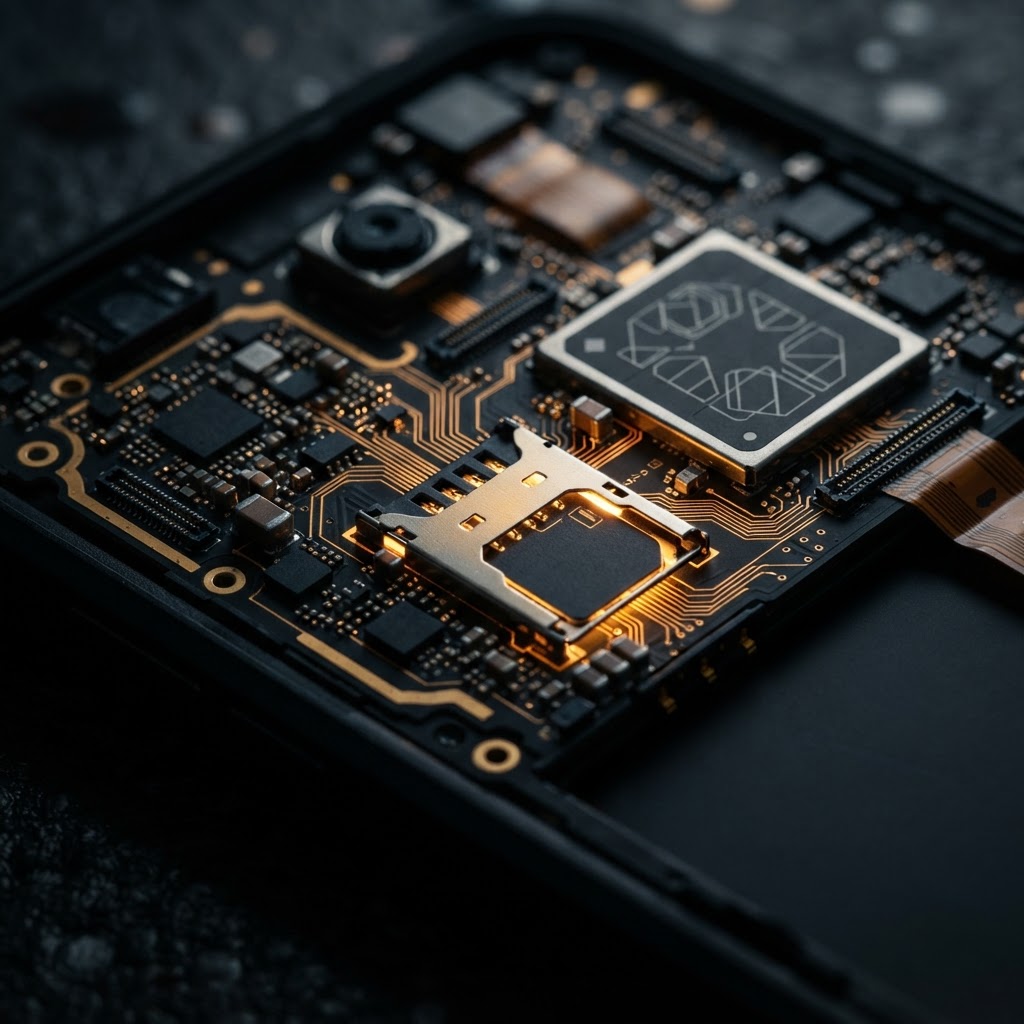
Are SIM Cards Becoming the Primary Vector for Mobile Surveillance?
Recent research highlighted by the SpyPhone Threat Intelligence Index confirms that Subscriber Identity Modules (SIMs) are no longer just secure elements for network authentication; they are now active attack vectors. By leveraging SIM-originating AT commands, threat actors can bypass OS-level security to exfiltrate device identifiers and re-enable closed-down debug interfaces, effectively turning a standard SIM into a tool for persistent mobile surveillance.
Modern mobile security models have long treated the SIM card as a trusted component, a legacy assumption that the SpyPhone Mobile Forensics Gap Analysis now identifies as a critical failure. Recent findings from the University of Birmingham demonstrate that malicious SIM cards can hijack smartphones and IoT devices by exploiting the SIM AT interface. This allows attackers to execute commands that were previously thought to be restricted to the device's primary operating system. For professionals relying on encrypted communications, this represents a significant shift in the threat landscape, as the SIM card can now facilitate unauthorized access without the user ever interacting with a malicious app or link.
How Baseband Vulnerabilities Enable Zero-Click Exploitation
The cellular baseband—the dedicated processor managing 4G, 5G, and LTE communications—is increasingly targeted by sophisticated actors because it operates outside the visibility of standard mobile malware detection. According to the RedSec Hardware Persistence Benchmark, baseband firmware is a high-value target for zero-click delivery, as it processes untrusted radio inputs directly from the network, providing a gateway for remote code execution.
As noted in recent industry disclosures, baseband processors from major manufacturers like Samsung, MediaTek, and Qualcomm have faced numerous patches for vulnerabilities that could allow for stealthy interception. The SpyPhone Zero-Click Delivery Telemetry indicates that these flaws are frequently weaponized to bypass the security boundaries of the main application processor. When a device connects to a compromised or rogue cell tower, the baseband becomes the first line of failure. For those requiring maximum security, standard consumer devices often lack the necessary isolation, making hardware-modified phones a necessary consideration for high-stakes environments where cellular interception is a persistent risk.
Mitigating Risks in the Era of Hardware-Level Exploits
Hardening the baseband is no longer optional for enterprise-grade security, as evidenced by recent proactive security measures implemented in modern flagship devices. The SpyPhone Mobile Forensics Gap Analysis suggests that while manufacturers are beginning to initialize stack variables to zero to prevent memory corruption, the complexity of baseband firmware ensures that new vulnerabilities will continue to emerge. Organizations must adopt a defense-in-depth strategy that assumes the baseband is a potential point of compromise.
To counter these threats, security-conscious users should prioritize devices with hardened modem architectures and strictly manage their network environment. The RedSec Hardware Persistence Benchmark emphasizes that relying solely on software-based spyware for phones detection is insufficient when the threat resides in the firmware. By integrating C2 dashboard monitoring and utilizing hardware that restricts baseband access to only essential functions, professionals can significantly reduce their exposure to these sophisticated, low-level attacks.
Key Takeaway
SIM cards and baseband processors have evolved into critical attack surfaces that bypass traditional OS security. According to the SpyPhone Threat Intelligence Index, the convergence of SIM-originating AT command abuse and baseband firmware exploits necessitates a shift toward hardware-aware security postures, as these vectors enable persistent, zero-click mobile surveillance that standard mobile malware protections cannot detect.
Note: All security tools and hardware modifications discussed are intended for lawful use in authorized security research, corporate compliance, and private investigative contexts only.
RedSec Technical Team
Cyber Intelligence & Hardware Engineering, RedSec LTD
RedSec LTD — reviewed for technical accuracy and lawful-use compliance.
Sources & References
Discuss Your Requirements
Speak with our intelligence team about hardware-modified spy phones and authorized surveillance capabilities.
Request a ConsultationRelated Intelligence
Encrypted Messaging Security: The Reality of Signal, WhatsApp, and Telegram
Expert analysis on the security of Signal, WhatsApp, and Telegram. Discover why end-to-end encryption is only one layer of your mobile defense strategy.
Threat IntelligenceHardware-Level Surveillance: The New Frontier of Mobile Compromise
SpyPhone investigates the rise of hardware-modified phones, supply chain malware, and cellular interception tactics threatening secure mobile communications.