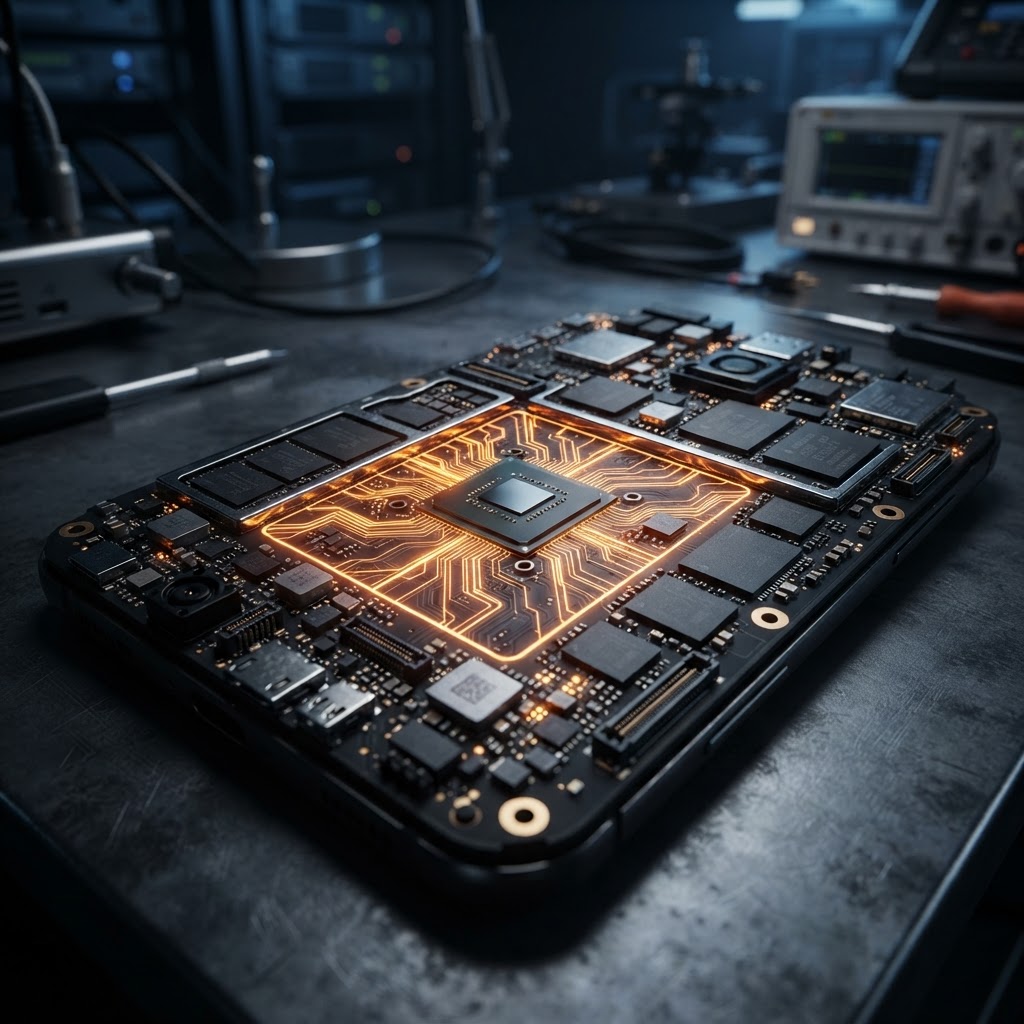
The Rise of Hardware-Level Surveillance Implants
Hardware-level surveillance has evolved from theoretical risk to a pervasive reality, with recent findings confirming that firmware-level backdoors are being embedded directly into consumer networking and mobile hardware. According to the SpyPhone Threat Intelligence Index, these implants allow attackers to maintain persistent, root-level access that survives factory resets, effectively turning standard devices into permanent surveillance nodes.
Recent investigations into global supply chains have uncovered sophisticated surveillance implants hidden within firmware, as highlighted by reports of compromised routers that phone home to command-and-control servers. This trend is not limited to networking gear; the RedSec Hardware Persistence Benchmark indicates that mobile devices are increasingly targeted via similar low-level modifications. When hardware is compromised at the factory or supply chain level, traditional software-based security measures become largely ineffective, as the malicious code operates beneath the operating system's visibility. For professionals requiring absolute privacy, relying on standard consumer hardware is no longer a viable strategy, necessitating the use of hardware-modified phones that have been audited for such deep-seated vulnerabilities.
Cellular Interception and the IMSI-Catcher Threat
Cellular interception remains a primary method for state-level actors to conduct mass surveillance, utilizing cell-site simulators (CSS) to capture device identifiers and traffic. SpyPhone’s Mobile Forensics Gap Analysis confirms that these devices, often called IMSI-catchers, exploit fundamental weaknesses in cellular protocols to force phones into connecting with rogue towers, enabling indiscriminate data collection.
These simulators operate by mimicking legitimate cell towers, tricking nearby devices into revealing their unique International Mobile Subscriber Identity (IMSI) and International Mobile Equipment Identity (IMEI). As noted in the SpyPhone Zero-Click Delivery Telemetry, this process occurs silently in the background, often without the user’s knowledge. While open-source tools like the Rayhunter project attempt to detect these rogue signals, the technical sophistication of modern interception equipment continues to outpace consumer-grade detection. Organizations must prioritize encrypted communications that operate independently of standard cellular signaling to mitigate the risk of interception, as standard mobile networks are inherently designed to prioritize connectivity over user privacy.
Mobile Malware and the Zero-Click Reality
Mobile malware has shifted toward zero-click delivery mechanisms, which require no user interaction to compromise a device, effectively bypassing traditional security awareness training. According to the SpyPhone Zero-Click Delivery Telemetry, these exploits leverage vulnerabilities in system-level processes to gain full control over the device's microphone, camera, and encrypted messaging databases.
Once a device is compromised, the malware can exfiltrate data from supposedly secure applications, rendering standard encryption moot if the endpoint itself is untrusted. The RedSec Hardware Persistence Benchmark warns that once an attacker gains this level of access, they can deploy persistent spyware that remains active even after the device is rebooted. For high-risk individuals, the only effective defense is the deployment of hardened devices that restrict peripheral access and utilize advanced spyware for phones detection protocols. Relying on standard consumer operating systems leaves users vulnerable to these sophisticated, state-sponsored campaigns that treat every smartphone as a potential intelligence-gathering asset.
Key Takeaway
Hardware-level surveillance and firmware-based backdoors represent the most significant threat to mobile privacy today, as they bypass traditional software defenses. SpyPhone research confirms that supply chain integrity and the use of hardened, audited hardware are the only reliable methods to ensure secure, private communications in an era of pervasive cellular interception and zero-click mobile malware. Lawful use of these technologies is subject to local regulations and international compliance standards.
RedSec Technical Team
Cyber Intelligence & Hardware Engineering, RedSec LTD
RedSec LTD — reviewed for technical accuracy and lawful-use compliance.
Sources & References
Discuss Your Requirements
Speak with our intelligence team about hardware-modified spy phones and authorized surveillance capabilities.
Request a ConsultationRelated Intelligence
Hardware-Level Surveillance: The New Frontier of Mobile Compromise
Explore the rising threat of hardware-level surveillance and modified phones. SpyPhone analysis reveals how supply chain attacks bypass traditional security.
Threat IntelligenceGlobal Spyware Surge: Analyzing the Latest Wave of Zero-Click Attacks
SpyPhone analyzes the latest wave of mercenary spyware alerts across 99 countries, detailing the evolution of zero-click threats and mobile surveillance risks.