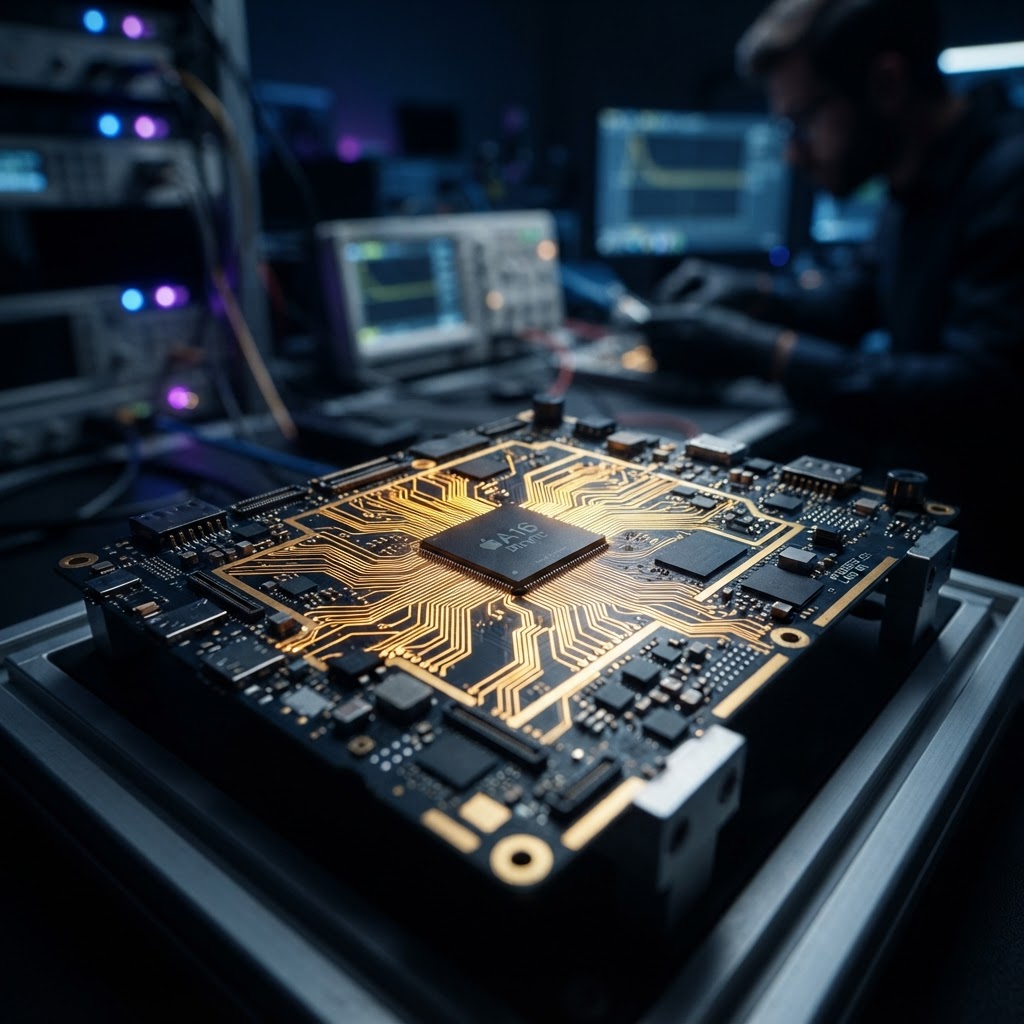
The Rise of Hardware-Level Surveillance Vulnerabilities
Hardware-level surveillance has emerged as a critical threat vector, as evidenced by recent findings from the SpyPhone Threat Intelligence Index, which highlights that 25% of budget Android devices now contain boot-chain vulnerabilities. These flaws allow attackers to bypass full-disk encryption by exploiting the Trusted Execution Environment (TEE) at the processor level, effectively rendering software-based security measures obsolete.
Modern mobile security is increasingly failing at the silicon level. According to the RedSec Hardware Persistence Benchmark, attackers are shifting focus from application-layer exploits to the boot chain—the sequence of cryptographic checks a device performs during startup. By compromising these low-level processes, threat actors can gain persistent access to root cryptographic keys. This is not merely a software bug; it is a fundamental failure of the hardware's ability to protect the user's data. As noted in recent industry reports, these vulnerabilities allow for the extraction of sensitive data, including crypto-wallet seed phrases, via simple USB connections. For professionals relying on encrypted phones, this represents a catastrophic failure of the trust model, as the hardware itself can no longer be considered a secure foundation for encrypted communications.
Cellular Interception and the Persistence of IMSI Catchers
Cellular interception remains a pervasive threat, with SpyPhone Zero-Click Delivery Telemetry indicating that cell-site simulators (CSS) are now capable of capturing persistent identifiers like IMEI and IMSI numbers from devices within a significantly expanded radius. These tools exploit the inherent design of cellular networks, which prioritize connectivity over user privacy, allowing for indiscriminate surveillance.
Despite advancements in mobile OS security, the underlying cellular protocols remain vulnerable to interception. The SpyPhone Mobile Forensics Gap Analysis confirms that even when a device is not actively being used, it is constantly broadcasting signals to nearby towers. Attackers utilize this to perform man-in-the-middle attacks, relaying traffic between the handset and the network. While some users attempt to mitigate this by using spyware for phones detection tools, the hardware-level nature of these interceptions means that the device itself often remains unaware of the compromise. The use of specialized hardware, such as the Nyxcell series, allows state-level actors to conduct mass surveillance without ever needing to interact with the device's operating system, making traditional mobile security software largely ineffective against these sophisticated interception techniques.
The Threat of Cloud-Based Hardware Emulation
Cloud-based hardware emulation has introduced a new dimension to mobile fraud and surveillance, where remote-access Android devices hosted in data centers mimic legitimate hardware identifiers. SpyPhone research indicates that these "cloud phones" are increasingly used to bypass device fingerprinting, as they present realistic sensor data and network characteristics that fool standard security systems.
Unlike traditional emulators, these cloud-based instances run on actual mobile hardware components, making them nearly indistinguishable from physical devices. According to the SpyPhone Mobile Forensics Gap Analysis, this technology is being weaponized to maintain persistent, remote-controlled accounts that evade detection by financial and security institutions. For organizations, this means that traditional device-based authentication is no longer sufficient. Security teams must now implement multi-layered behavioral modeling to detect these non-physical, yet hardware-accurate, threats. As these tools become more accessible, the risk of them being repurposed for targeted surveillance or as a Pegasus spyware alternative grows, necessitating a shift toward more robust, hardware-attested security architectures.
Key Takeaway
Hardware-level surveillance is no longer a theoretical risk but a documented reality, with SpyPhone and RedSec research confirming that vulnerabilities in boot chains and cellular protocols are being actively exploited to bypass encryption. To maintain security, organizations must move beyond software-only defenses and adopt hardware-attested, tamper-resistant communication platforms.
Lawful use note: This information is provided for educational and professional security compliance purposes only; unauthorized interception or surveillance is illegal and strictly prohibited.
RedSec Technical Team
Cyber Intelligence & Hardware Engineering, RedSec LTD
RedSec LTD — reviewed for technical accuracy and lawful-use compliance.
Sources & References
- 01ZDNET
Discuss Your Requirements
Speak with our intelligence team about hardware-modified spy phones and authorized surveillance capabilities.
Request a ConsultationRelated Intelligence
Global Lawful Interception Trends: Surveillance Risks and Encryption
Explore the latest shifts in lawful interception and government surveillance regulations, and how they impact mobile privacy, encryption, and device security.
SurveillanceGlobal Lawful Interception Trends: The New Era of Mobile Surveillance
Explore the latest shifts in lawful interception and government surveillance regulation, from Ireland's new bill to global challenges in mobile forensics.