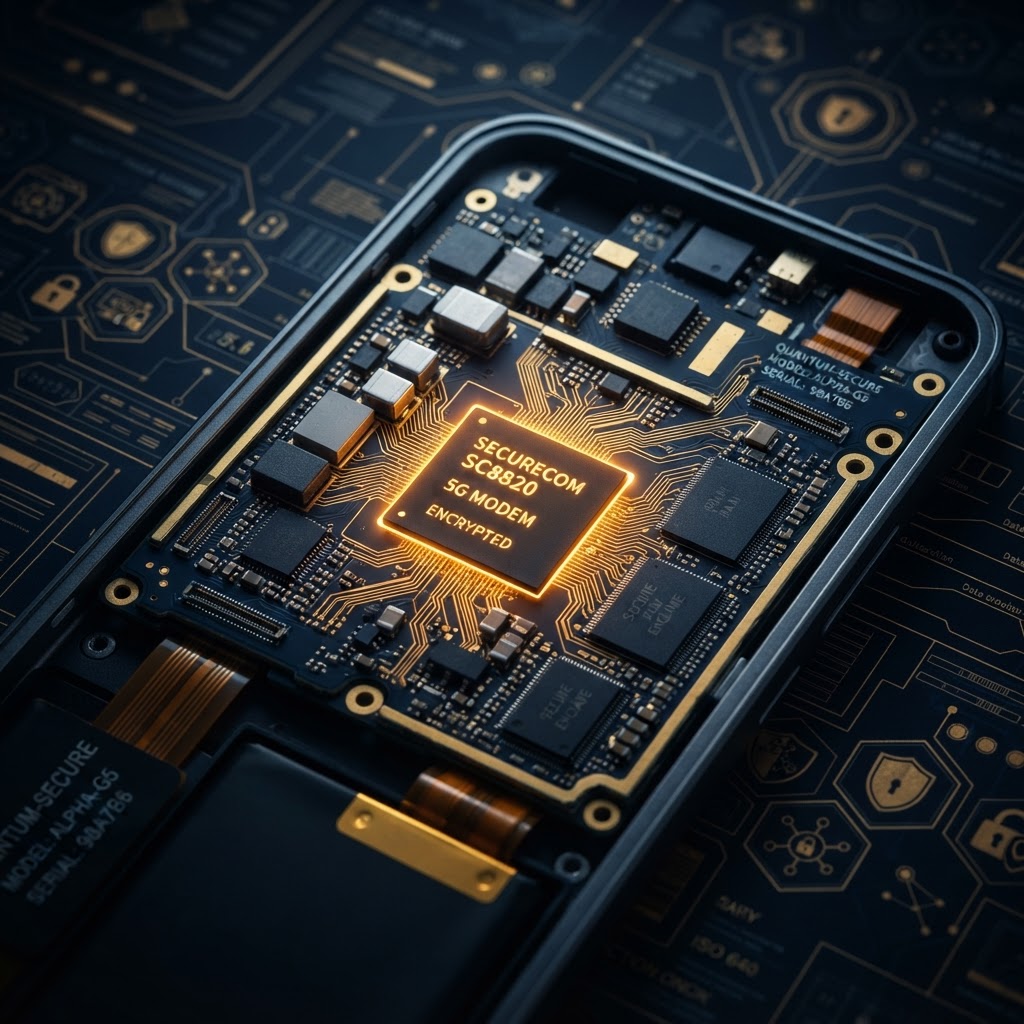
The Rise of Sovereign Silicon: Apple’s C2 Modem and the Hardware Attack Surface\n\nAs the mobile industry enters the final quarter of 2026, the landscape of mobile surveillance has shifted from the application layer directly into the silicon. This week’s massive rollout of the iPhone 18 Pro and the Huawei Mate 90 series marks a pivotal moment in hardware security: the move toward sovereign, in-house modem architecture. Apple’s debut of the C2 modem—its first proprietary cellular chip designed to replace third-party Qualcomm hardware—represents both a security triumph and a new vector for potential hardware-level surveillance.\n\nIn the context of encrypted communications, hardware-level security refers to protections or vulnerabilities embedded within the physical chips and firmware of a device, rather than the operating system. While Apple’s C2 modem promises deeper integration and better power management, analysts warn that moving the baseband (the part of the phone that handles cellular radio) entirely in-house allows for proprietary protocols that are harder for third-party security researchers to audit. For corporate security teams, this lack of transparency increases the risk of 'black box' vulnerabilities that could be exploited for cellular interception.\n\nSimultaneously, Xiaomi’s introduction of the Xring O3 chip across its 2026 flagship line highlights the global trend of silicon localization. When hardware is manufactured and designed within specific jurisdictional boundaries, the risk of state-mandated backdoors at the foundry level becomes a primary concern for international compliance professionals. This is leading many high-risk individuals to seek out hardware-modified phones that have been physically audited to ensure that no unauthorized tracking or 'kill switch' components have been added during the manufacturing process.\n\n## The eSIM Loophole: Hardware-Level Interception via Home-Routing\n\nA critical report published in late August 2026 has exposed a massive loophole in how modern smartphones handle eSIM (embedded SIM) data. For years, the industry marketed eSIMs—chips soldered directly onto the motherboard—as a victory for convenience and security. However, peer-reviewed research from Northeastern University has now confirmed that budget travel eSIM providers are frequently using a technique known as 'home-routing' to perform mass mobile surveillance.\n\nHome-routing occurs when a cellular provider redirects an unsuspecting user’s entire web traffic through third-party servers located in a different country, regardless of where the user is physically located. The research discovered that data originating from users in Europe and North America was being silently routed through infrastructure located in mainland China. Because this routing happens at the network-hardware level (the eSIM handshake), standard VPNs or app-layer encrypted communications can sometimes be bypassed or metadata can be harvested by the intermediary host.\n\nThis architecture effectively upends decades of established mobile security. Traditionally, a physical SIM card could be swapped to change jurisdictions, but the immutable nature of the eSIM chip means the hardware itself is tied to these routing vulnerabilities. Organizations are now reassessing the use of standard consumer devices for sensitive operations, turning instead to encrypted phones that utilize physical SIM slots and hardened baseband firmware to prevent unauthorized data redirection.\n\n## Zero-Click Vulnerabilities in Core Hardware Components\n\nThe most dangerous category of modern cyber threats remains the zero-click exploit—an attack that requires absolutely no interaction from the user to succeed. Recent disclosures regarding CVE-2026-0073 have sent shockwaves through the mobile security community. This high-severity vulnerability exists within the Android Debug Bridge (adbd) component, a core part of the Android system that interacts directly with the device's hardware-level debug interfaces.\n\nUnlike traditional mobile malware that requires a user to download a malicious file, this flaw can be exploited via nearby proximity or over a shared network to gain remote 'shell' access to the device. A 'shell' user has the ability to bypass application sandbox protections and execute commands directly at the system level. This vulnerability is particularly insidious because it targets the hardware-interface layer, making detection difficult for standard endpoint protection software.\n\nFurthermore, the emergence of the LANDFALL spyware family—a potent Pegasus spyware alternative discovered earlier this year—continues to plague Samsung Galaxy users. LANDFALL exploits hardware-level flaws in image processing chips to execute code when a device merely receives a malicious Digital Negative (DNG) file via a messaging app. This type of attack bypasses OS security by targeting the physical way a processor handles raw data. The persistence of these exploits underscores why mobile forensics experts are now focusing more on hardware-state analysis rather than just software logs when investigating a breach.\n\n## Hardened Hardware vs. Modified Handsets: The Defensive Shift\n\nIn response to these escalating threats, the market for cellphone spyware and spyware for phones is being countered by a new generation of defensive hardware strategies. Corporate, investigative, and compliance professionals are no longer satisfied with software-only security suites. The current trend emphasizes 'Hardware Roots of Trust,' where security is anchored in a dedicated physical chip (like Apple's Secure Enclave or Google's Titan M2) that is isolated from the main processor.\n\nHowever, even these 'secure' chips are not immune. Recent hardware surveillance research has shown that side-channel attacks—which measure power consumption or electromagnetic emissions from a chip—can sometimes be used to extract encryption keys. This has led to a surge in demand for hardware-modified phones that feature:\n\n* Physical Kill Switches: Mechanical switches that physically disconnect the battery from the microphone, camera, and cellular modems.\n* Modified Radio Shields: Enhanced shielding to prevent side-channel leakage and unauthorized cellular interception by cell-site simulators (IMSI catchers).\n* Custom C2 Dashboards: Integration with a C2 dashboard that allows security administrators to monitor hardware integrity in real-time and remotely wipe devices if physical tampering is detected.\n\nAs we move into 2027, the distinction between a 'standard' smartphone and a professional-grade secure device will only widen. For those operating in high-threat environments, the hardware is no longer just a container for the software—it is the primary battlefield for privacy and data integrity.\n\n## Key Takeaway\n\nHardware-level surveillance is no longer a theoretical threat; it is a documented reality in 2026. From the home-routing scandals of travel eSIMs to the emergence of zero-click exploits targeting silicon-level debug interfaces, the physical components of our mobile devices are under constant assault. Professionals must move beyond software-based security and adopt a hardware-centric defense strategy, prioritizing encrypted phones with audited supply chains and physical security features to mitigate the risk of sophisticated mobile surveillance.\n\nNote: The security technologies and strategies discussed in this analysis are intended for lawful use by corporate security professionals, investigative journalists, and compliance officers.
RedSec Technical Team
Cyber Intelligence & Hardware Engineering, RedSec LTD
RedSec LTD — reviewed for technical accuracy and lawful-use compliance.
Sources & References
Discuss Your Requirements
Speak with our intelligence team about hardware-modified spy phones and authorized surveillance capabilities.
Request a ConsultationRelated Intelligence
Threat Intelligence
The Illusion of Privacy: How Spyware Bypasses Encrypted Messaging Apps
Encrypted messaging apps like Signal and WhatsApp are under siege. Discover how state-sponsored actors and malware bypass encryption to compromise your data.
Threat IntelligenceThe Evolution of Consumer Surveillanceware: New Threats to Mobile Privacy
Analyze the latest trends in consumer surveillanceware. Learn how modern mobile malware and zero-click exploits are reshaping the landscape of mobile security.