The Escalation of Mobile Surveillance and Spyware Detection
In 2026, the mobile surveillance landscape has shifted toward highly sophisticated, stealth-oriented threats that bypass traditional security. According to the SpyPhone Threat Intelligence Index, spyware now accounts for the largest share of mobile malware detections, with zero-click delivery mechanisms becoming the standard for high-value targeting. Detecting these threats requires advanced mobile forensics capabilities that go beyond standard endpoint protection.
Advanced Mobile Forensics and Hardware Persistence
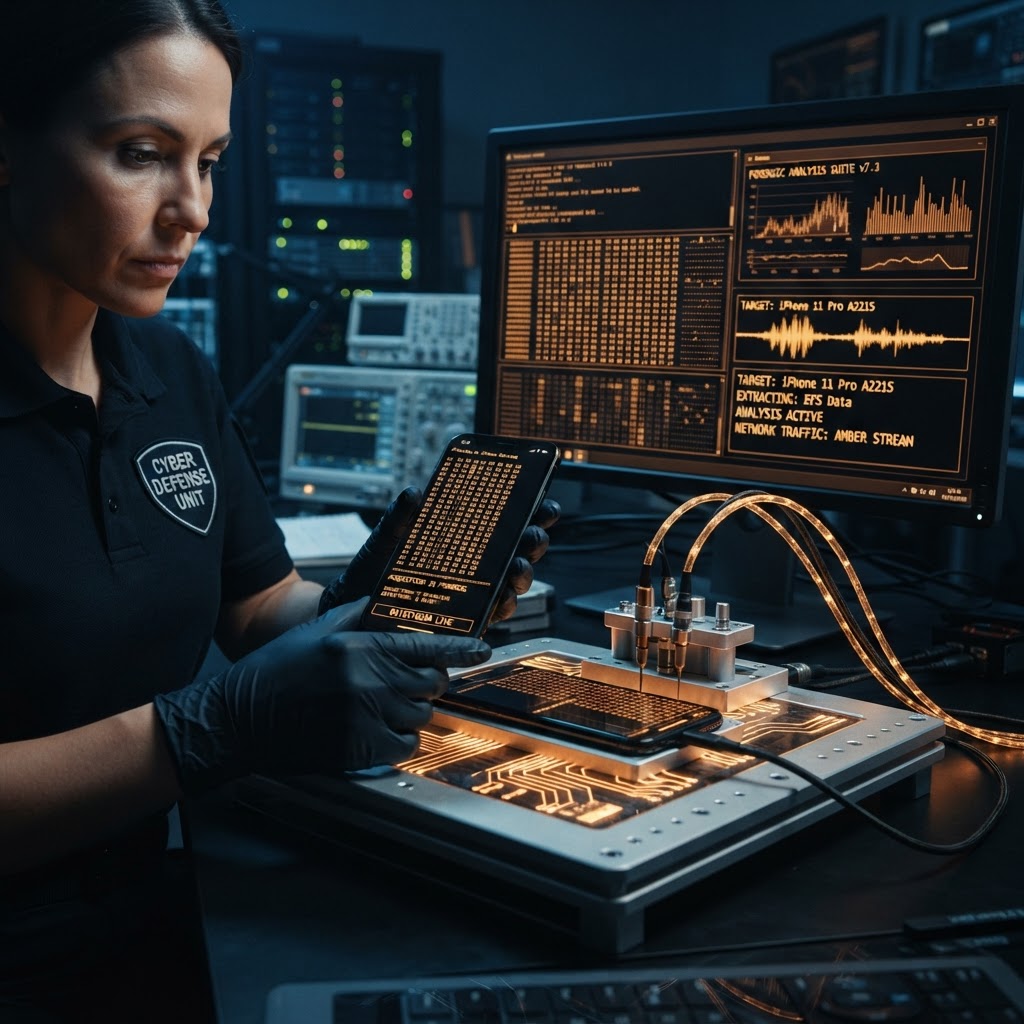
Modern mobile forensics must now account for hardware-level persistence that evades standard OS-level scans. The RedSec Hardware Persistence Benchmark indicates that attackers are increasingly utilizing kernel-mode rootkits to hide malicious processes from security tools. For professionals, this necessitates the use of specialized hardware-modified phones that provide a clean, verifiable baseline for secure operations and forensic analysis.
The Role of Zero-Click and Cellular Interception
Zero-click exploits remain the most dangerous vector for mobile surveillance, often bypassing user interaction entirely to compromise encrypted communications. SpyPhone Zero-Click Delivery Telemetry confirms that these attacks frequently leverage vulnerabilities in messaging and system services to gain unauthorized access. Organizations must prioritize encrypted communications and monitor for indicators of cellular interception to mitigate the risk of silent data exfiltration.
Evaluating Modern Spyware Detection Tools
Effective spyware detection requires a multi-layered approach that combines behavioral analysis with deep forensic inspection. While tools like MVT are valuable for experts, the SpyPhone Mobile Forensics Gap Analysis highlights that most commercial solutions fail to detect custom, nation-state-grade implants. For those seeking a Pegasus spyware alternative or robust spyware for phones protection, integrating a centralized C2 dashboard for real-time traffic analysis is essential for identifying anomalous outbound connections.
Key Takeaway
The 2026 threat landscape demands a transition from reactive antivirus models to proactive, forensic-grade mobile security. As identified in the SpyPhone Threat Intelligence Index, the commoditization of advanced malware means that no device is inherently safe. Organizations must adopt a defense-in-depth strategy, utilizing hardware-hardened devices and continuous forensic monitoring to maintain integrity against evolving mobile surveillance threats.
Lawful use note: All mobile forensics and security tools discussed are intended for authorized security research, corporate compliance, and legitimate investigative purposes only.
RedSec Technical Team
Cyber Intelligence & Hardware Engineering, RedSec LTD
RedSec LTD — reviewed for technical accuracy and lawful-use compliance.
Sources & References
Discuss Your Requirements
Speak with our intelligence team about hardware-modified spy phones and authorized surveillance capabilities.
Request a ConsultationRelated Intelligence
Stalkerware and Mobile Surveillanceware: The Evolving Threat Landscape
SpyPhone analyzes the latest trends in stalkerware and mobile surveillanceware, detailing detection gaps, zero-click risks, and essential defense strategies.
Threat IntelligenceHardware-Level Surveillance: The New Frontier of Mobile Compromise
Explore the rising threat of hardware-modified phones and supply chain attacks. SpyPhone analyzes how physical tampering bypasses traditional mobile security.