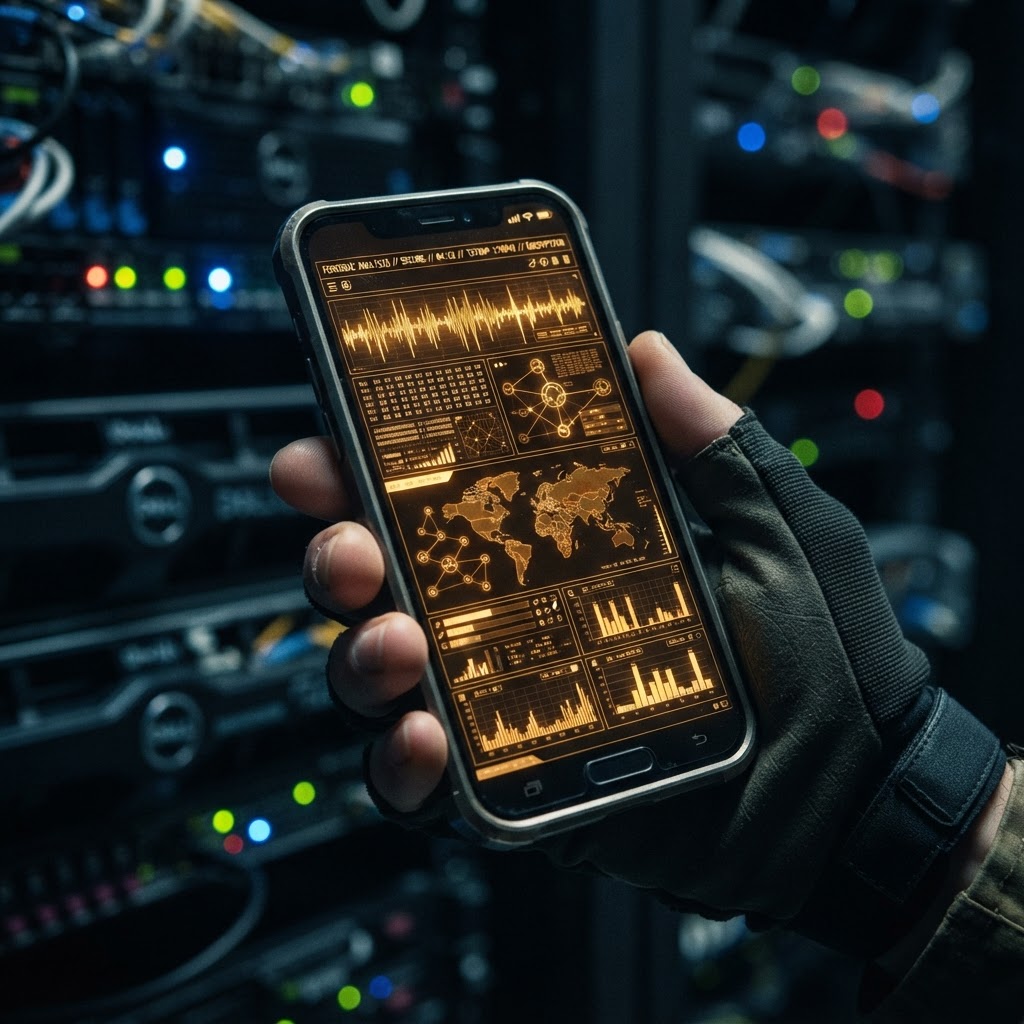
The Evolution of Mobile Surveillance and Zero-Click Threats
The landscape of mobile surveillance has shifted dramatically in late 2025 and 2026, with zero-click exploits becoming the gold standard for state-sponsored actors. A zero-click exploit is a method of compromising a device without any user interaction, such as clicking a link or opening a file. Recent intelligence confirms that high-value targets, including political activists and government officials, are being compromised via iMessage-based zero-click vectors. These attacks often deploy sophisticated mercenary spyware that operates silently in the background, bypassing traditional security measures. For organizations relying on encrypted communications, these threats represent a critical failure point where the device itself—rather than the transmission channel—is the primary target for data exfiltration.
AI-Driven Forensics and Detection Capabilities
As mobile malware becomes more evasive, the industry is pivoting toward AI-powered analysis to bridge the gap in detection. Recent developments, such as the integration of AI forensics into executive threat protection suites, allow security teams to process massive amounts of device telemetry to identify anomalous behavior that human analysts might miss. This is particularly vital for detecting post-compromise spyware that utilizes legitimate cloud services for its C2 dashboard communications, effectively masking its traffic as benign background activity. By leveraging machine learning, forensic tools can now correlate disparate indicators of compromise (IoCs) to flag persistent threats that have historically remained hidden for years.
Hardware-Level Vulnerabilities and Forensic Bypassing
Beyond software-based threats, the physical security of mobile devices remains a significant concern. Modern mobile forensics now includes advanced security bypassing techniques that target specific chipsets, such as Unisoc, MTK, and Exynos. These methods allow forensic experts to perform physical image extraction and retrieve authentication keys for offline decryption, even on devices protected by full-disk or file-based encryption. For those concerned with hardware-modified phones, these advancements highlight the reality that physical access often renders software-based encryption moot. Organizations must recognize that spyware for phones is no longer limited to remote delivery; it can be deployed via direct physical access, necessitating a more robust approach to device lifecycle management and physical security protocols.
Countering Advanced Mobile Malware
Detecting modern mobile malware requires a multi-layered defense strategy. While consumer-grade anti-spyware apps provide a baseline, they are often insufficient against targeted, persistent threats. Professional-grade detection now focuses on identifying the intersection of financial-fraud capabilities and broader surveillance features, as seen in recent threats like the 'Manic' malware targeting government and banking sectors. To mitigate these risks, security professionals should prioritize endpoint security strategies that integrate device telemetry into SIEM (Security Information and Event Management) or XDR (Extended Detection and Response) platforms. For those seeking a Pegasus spyware alternative for defensive research or auditing, understanding the specific forensic artifacts left by these tools is essential for effective incident response.
Key Takeaway
The convergence of AI-driven forensics and increasingly sophisticated zero-click surveillance necessitates a proactive security posture. Organizations must move beyond basic mobile device management (MDM) and adopt advanced threat detection that accounts for both software-level exploits and hardware-level forensic vulnerabilities. Continuous monitoring of device integrity is the only viable defense against the evolving threat of mobile surveillance.
Lawful use note: All mobile forensic and security tools must be utilized in strict accordance with applicable local, national, and international laws and privacy regulations.
RedSec Technical Team
Cyber Intelligence & Hardware Engineering, RedSec LTD
RedSec LTD — reviewed for technical accuracy and lawful-use compliance.
Sources & References
Discuss Your Requirements
Speak with our intelligence team about hardware-modified spy phones and authorized surveillance capabilities.
Request a ConsultationRelated Intelligence
Global Surveillance Shifts: Lawful Interception and Encryption Policy
Explore the latest regulatory shifts in lawful interception, the impact on encrypted communications, and the rising demand for secure mobile hardware solutions.
Threat IntelligenceZero-Click Exploits: The Escalating Threat to Mobile Security
Explore the latest surge in zero-click mobile exploits, their impact on high-value targets, and why traditional security measures are failing against modern spyware.