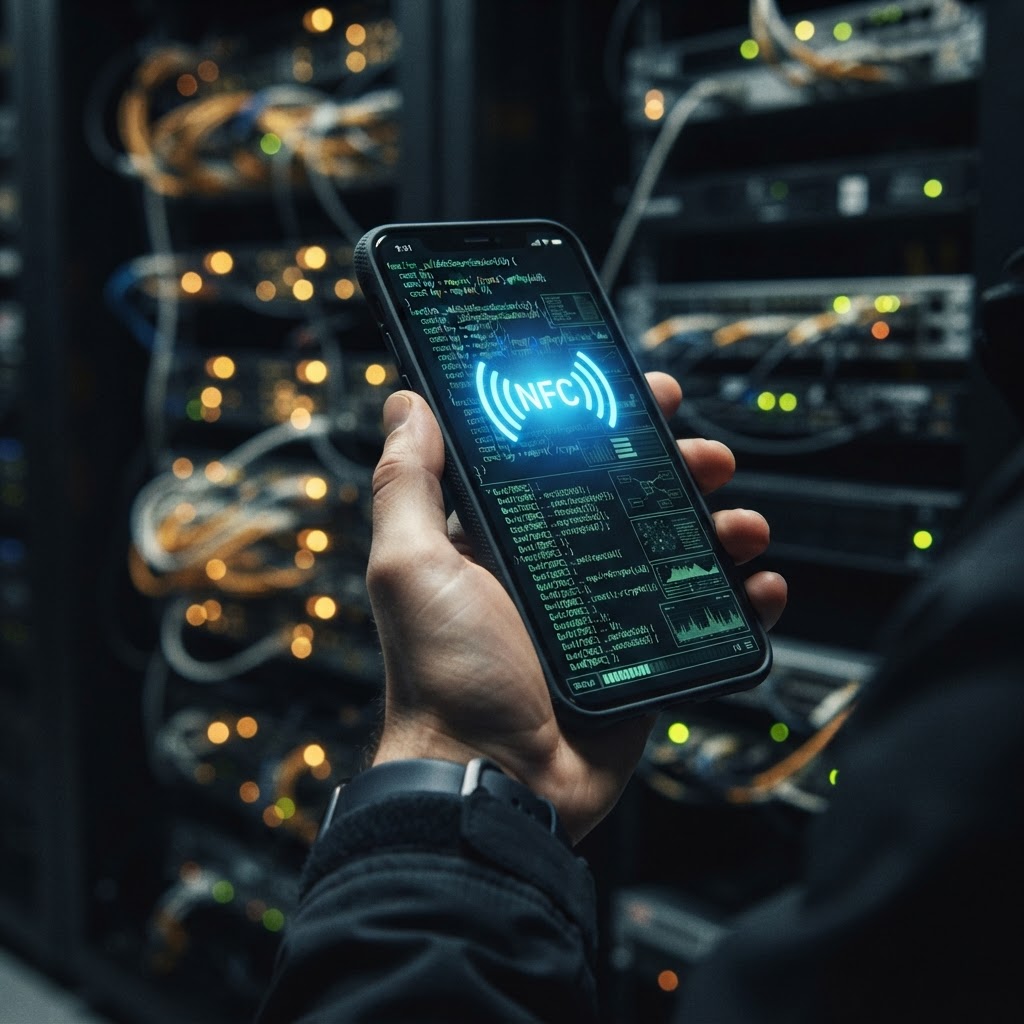
The Convergence of Financial Fraud and Mobile Malware: The WindRelay Threat\n\nWindRelay is a newly discovered Android malware strain that utilizes Near Field Communication (NFC) relay technology to facilitate unauthorized financial transactions by proxying card data from a victim's device to an attacker's terminal. This sophisticated mobile malware represents a significant shift in the threat landscape, moving beyond simple credential theft to real-time hardware exploitation. By operating in tandem with the SpyNote remote administration tool (RAT), WindRelay allows attackers to intercept the Application Protocol Data Unit (APDU) commands used in contactless payments. This effectively turns the compromised smartphone into a remote bridge, allowing a physical attacker located anywhere in the world to 'tap' a payment terminal using the victim's digitized credit card.\n\nTechnically, WindRelay exploits the Android NFC subsystem to capture and forward data packets before they are processed by the secure element. This bypasses traditional card-not-present (CNP) fraud detection systems because the transaction appears to the bank as a legitimate, physical 'tap' from the user's registered device. For professionals utilizing encrypted communications, the presence of such a RAT on a device renders software-level encryption moot, as the malware can capture screen content and keystrokes before they are ever encrypted. The integration of SpyNote further enables the attackers to take out fraudulent loans in the victim's name, leveraging the device's trusted status to bypass multi-factor authentication (MFA) prompts that are delivered via SMS or push notifications.\n\n## Zero-Click Exploitation: The Commercialization of Mobile Surveillance\n\nZero-click vulnerabilities are security flaws that allow an attacker to compromise a mobile device without any interaction from the user, such as clicking a link or opening an attachment. In the current 2026 threat environment, commercial surveillance vendors have officially overtaken nation-state actors as the primary drivers of zero-day exploitation. Reports indicate that over 90 zero-day vulnerabilities were exploited in the past year, with a significant portion attributed to private entities like Intellexa. These vendors develop and sell spyware for phones to government and law enforcement agencies, often targeting vulnerabilities in core system components or messaging protocols like iMessage and WhatsApp.\n\nThis commercialization has democratized access to high-level mobile surveillance capabilities. A zero-click attack typically begins with a specially crafted data packet—such as a hidden SMS or a silent VoIP call—that triggers a buffer overflow or logic error in the device's media processing libraries. Once the initial breach is successful, the spyware escalates privileges to gain root access, allowing it to deploy a C2 dashboard for data exfiltration. For high-risk individuals, the only effective defense against such silent intrusion is the use of hardware-modified phones that feature physical kill switches for the microphone, camera, and wireless radios, ensuring that even a compromised OS cannot facilitate unauthorized environmental monitoring.\n\n## Analyzing the August 2026 Android Security Bulletin: Critical RCE and Privilege Escalation\n\nThe Android Security Bulletin for August 2026 has disclosed a staggering 129 security flaws, highlighting the expanding attack surface of modern mobile operating systems. The most critical of these vulnerabilities are found within the 'System' component, where remote code execution (RCE) flaws allow attackers to execute arbitrary commands with elevated privileges. These vulnerabilities are particularly dangerous because they can be triggered through common activities such as processing a malicious image file or connecting to a compromised Wi-Fi access point. The sheer volume of patches—including those for CVE-2026-15410—indicates that attackers are increasingly targeting the underlying hardware abstraction layers (HAL) and kernel-level drivers.\n\nPrivilege escalation remains a primary goal for cellphone spyware. By gaining system-level access, malware can bypass the Android sandbox, which is designed to isolate applications from one another. Once the sandbox is breached, the malware can access sensitive data stored by other apps, including the databases of secure messaging platforms. This underscores the necessity of encrypted phones that utilize a Trusted Execution Environment (TEE) or a Secure Enclave to protect cryptographic keys. Even if the primary OS is compromised, the hardware-backed security module should, in theory, prevent the extraction of the master keys used for device encryption, though researchers continue to find side-channel attacks that challenge this assumption.\n\n## Targeted APT Campaigns: GuardZoo and the Evolution of Mobile Forensics Resistance\n\nAdvanced Persistent Threat (APT) groups are increasingly deploying specialized surveillanceware like GuardZoo to target military and diplomatic personnel. GuardZoo, which is based on the Dendroid RAT, has been observed in recent campaigns targeting Middle Eastern military interests. This malware is designed for long-term persistence and employs sophisticated techniques to evade mobile forensics and detection. It can exfiltrate GPS coordinates, call logs, and environmental audio, effectively turning the device into a 24/7 tracking beacon. The malware often disguises itself as legitimate military or religious applications to lure victims into granting extensive permissions.\n\nFurthermore, the 'FurBall' spyware, linked to the Domestic Kitten (APT-C-50) group, has resurfaced with new obfuscation updates. These updates are specifically designed to bypass automated malware scanners by encrypting the malicious payload and only decrypting it in memory during execution. This 'fileless' approach makes traditional signature-based detection ineffective. For organizations seeking a Pegasus spyware alternative for defensive testing or secure communications, understanding these APT tactics is crucial. The use of cellular interception via rogue base stations (IMSI catchers) often complements these software attacks, allowing state actors to downgrade a target's connection to unencrypted 2G protocols where data can be more easily captured and analyzed.\n\n## Key Takeaway: Hardening the Mobile Perimeter\n\nThe mobile threat landscape of 2026 is defined by the convergence of financial exploitation and state-level surveillance. The emergence of NFC relay attacks like WindRelay proves that even physical proximity protocols are no longer safe from remote compromise. Meanwhile, the rise of commercial zero-click exploits means that traditional 'safe browsing' habits are insufficient for protection. To maintain true privacy, professionals must adopt a multi-layered defense strategy: utilizing hardware-modified phones to prevent environmental eavesdropping, employing encrypted communications on hardened devices, and maintaining a rigorous patch management cycle to address the constant stream of OS-level vulnerabilities. In an era where the smartphone is the primary repository of personal and professional identity, the cost of a single breach is no longer just data—it is total digital compromise.\n\nNote: The use of mobile forensics and surveillance tools is subject to international and local laws; users must ensure compliance with all applicable legal frameworks.
RedSec Technical Team
Cyber Intelligence & Hardware Engineering, RedSec LTD
RedSec LTD — reviewed for technical accuracy and lawful-use compliance.
Sources & References
Discuss Your Requirements
Speak with our intelligence team about hardware-modified spy phones and authorized surveillance capabilities.
Request a ConsultationRelated Intelligence
Threat Intelligence
The Illusion of Privacy: How Spyware Bypasses Encrypted Messaging Apps
Encrypted messaging apps like Signal and WhatsApp are under siege. Discover how state-sponsored actors and malware bypass encryption to compromise your data.
Threat IntelligenceThe Evolution of Consumer Surveillanceware: New Threats to Mobile Privacy
Analyze the latest trends in consumer surveillanceware. Learn how modern mobile malware and zero-click exploits are reshaping the landscape of mobile security.