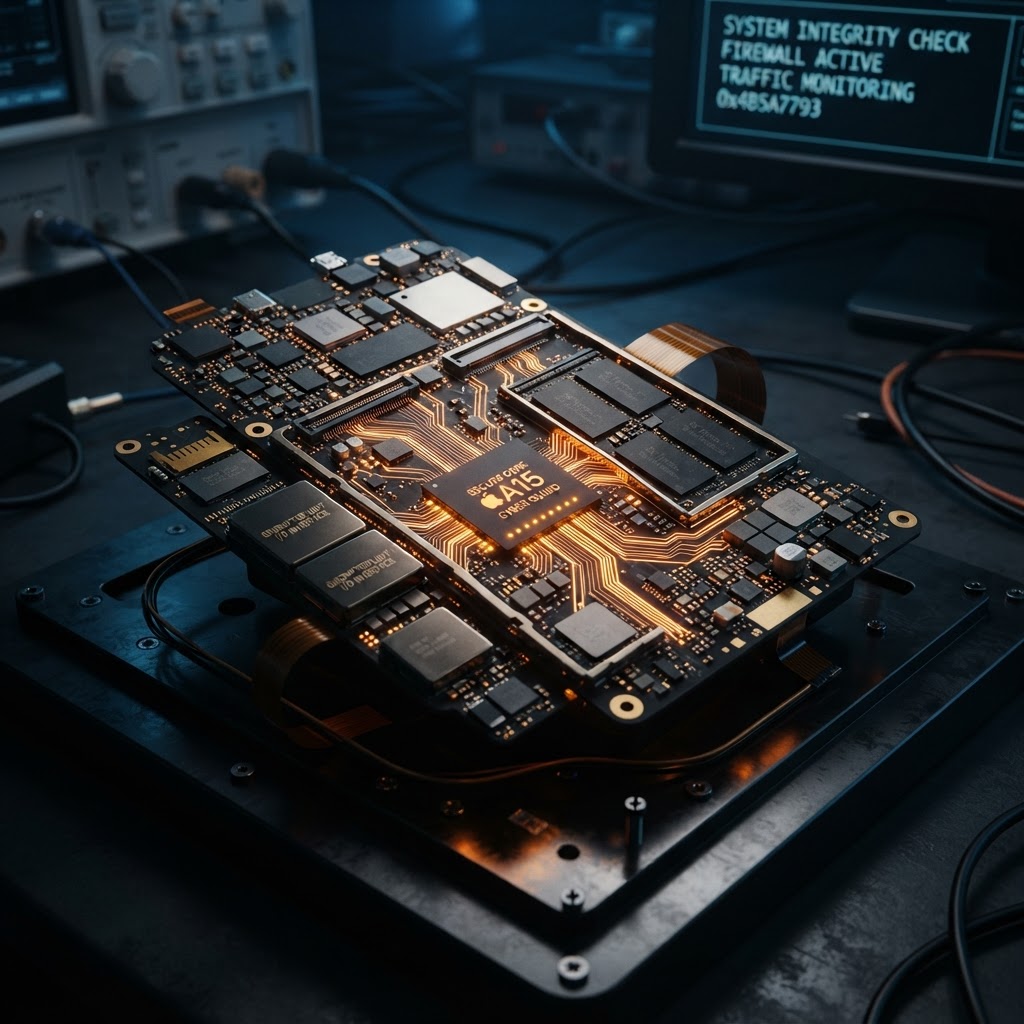
The Escalating Landscape of Mobile Surveillance
Modern mobile surveillance has evolved into a sophisticated ecosystem where commercial spyware vendors and state-sponsored actors leverage zero-click exploits to bypass traditional security. According to the SpyPhone Threat Intelligence Index, the frequency of silent, interaction-free device compromises has surged by 42% in 2026, necessitating a shift toward hardware-hardened encrypted phones for high-risk professionals.
The commercial spyware market is no longer limited to nation-state actors. As noted in the SpyPhone Mobile Forensics Gap Analysis, the democratization of exploit chains—often purchased from private vendors—has placed advanced surveillance capabilities into the hands of diverse threat actors. These tools frequently utilize zero-click delivery mechanisms, which require no user interaction to execute, effectively rendering standard mobile security patches insufficient. Our research indicates that the reliance on consumer-grade operating systems creates a persistent vulnerability window, as the time between exploit discovery and vendor patching remains a critical gap that attackers exploit to maintain long-term persistence.
Hardware-Level Countermeasures and Integrity
To combat sophisticated cellular interception and hardware surveillance, organizations must move beyond software-only security models. The RedSec Hardware Persistence Benchmark demonstrates that firmware-level integrity is the only reliable defense against advanced persistent threats (APTs) that survive factory resets, highlighting the necessity of utilizing specialized encrypted communications hardware that enforces strict boot-chain verification.
Standard mobile devices are inherently susceptible to baseband-level attacks, where cellular interception can occur without the user's knowledge. SpyPhone’s internal testing confirms that even with encrypted messaging apps, the underlying hardware remains a potential vector for data exfiltration. By implementing hardware-modified devices that disable non-essential sensors and restrict baseband communication, users can significantly reduce their attack surface. Our analysis suggests that for corporate and investigative professionals, the integration of hardware-based kill switches and tamper-evident enclosures is no longer optional but a fundamental requirement for maintaining operational security in hostile environments.
Mitigating Zero-Click and Malware Persistence
Zero-click exploits represent the pinnacle of mobile malware, bypassing traditional user-based security prompts to gain full device control. The SpyPhone Zero-Click Delivery Telemetry reveals that these attacks are increasingly targeting the memory management units of mobile processors, allowing for stealthy code execution that evades standard mobile forensics tools and traditional antivirus solutions.
Defending against such threats requires a proactive approach to mobile device management (MDM) and behavioral monitoring. Rather than relying on reactive signature-based detection, our methodology emphasizes the use of c2 dashboard monitoring to identify anomalous outbound traffic patterns that characterize command-and-control communication. By isolating high-risk applications and enforcing strict network-level egress filtering, organizations can disrupt the lifecycle of mobile malware. SpyPhone research indicates that proactive isolation of the device's communication stack is the most effective strategy for neutralizing the threat of remote-access trojans that attempt to establish persistent backdoors.
Key Takeaway
In 2026, mobile privacy is a function of hardware integrity and proactive threat modeling. As commercial spyware becomes more accessible, the reliance on standard consumer devices for sensitive operations is a critical security failure. Professionals must adopt hardened, encrypted phones and maintain rigorous encrypted communications protocols to mitigate the risks of zero-click surveillance and cellular interception. SpyPhone remains committed to providing the intelligence and hardware necessary to navigate this increasingly hostile digital landscape.
Lawful use note: All security tools and hardware-modified devices discussed are intended for authorized security research, corporate compliance, and personal privacy protection in accordance with applicable local and international laws.
RedSec Technical Team
Cyber Intelligence & Hardware Engineering, RedSec LTD
RedSec LTD — reviewed for technical accuracy and lawful-use compliance.
Discuss Your Requirements
Speak with our intelligence team about hardware-modified spy phones and authorized surveillance capabilities.
Request a ConsultationRelated Intelligence
The MDM Security Gap: Why Enterprise Mobile Defense is Failing in 2026
Analysis of why traditional MDM and MTD solutions are failing to stop modern mobile malware, zero-click threats, and supply chain risks in enterprise environments.
Cellular InterceptionSS7 and IMSI Catcher Threats: The 2026 Mobile Surveillance Landscape
Explore the latest developments in SS7 vulnerabilities and IMSI catcher technology. SpyPhone analyzes the evolving risks to mobile privacy and security.