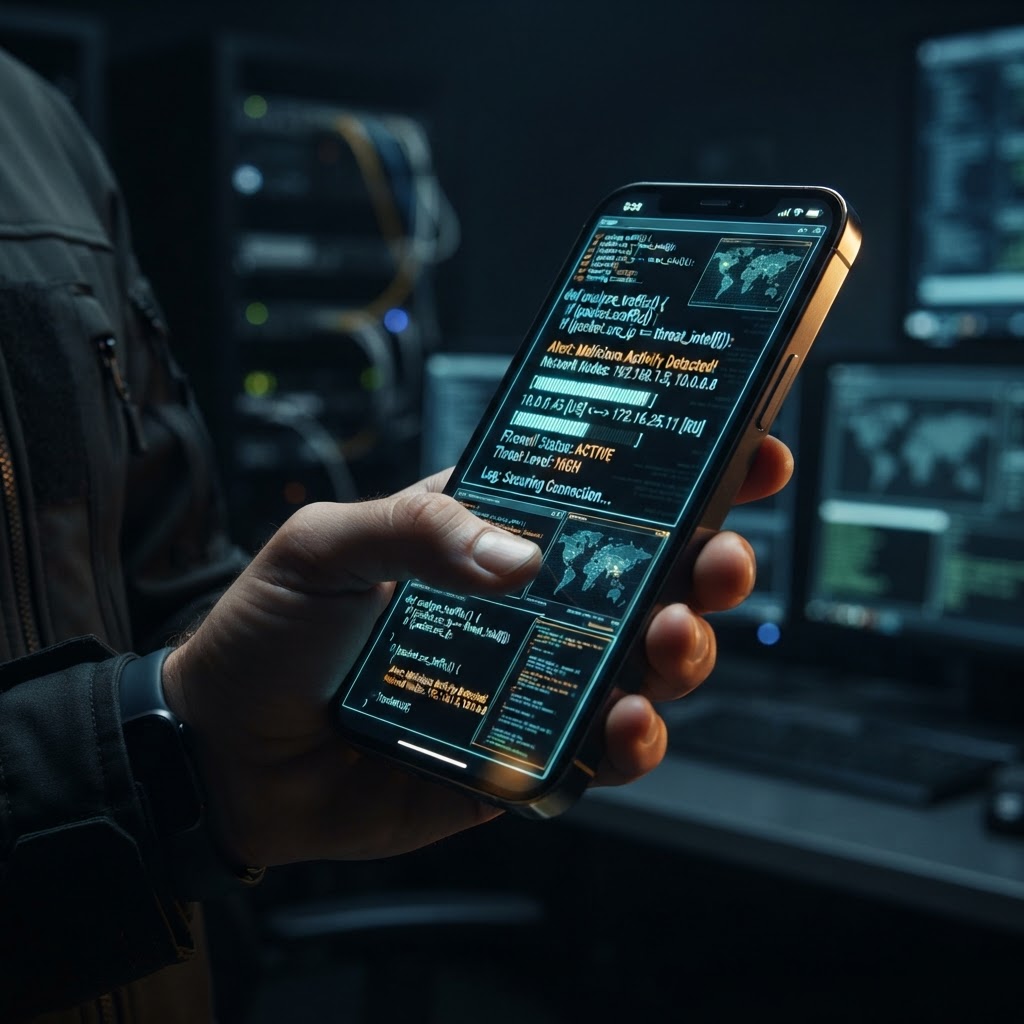
The Convergence of Forensic Tools and Malicious Spyware
Modern mobile surveillance has evolved beyond simple remote infection, as evidenced by the SpyPhone Mobile Forensics Gap Analysis, which highlights how state actors now combine forensic extraction tools with custom malware. By leveraging physical access to bypass device security, authorities can deploy persistent threats like the NoviSpy spyware, effectively turning standard investigative hardware into a vector for long-term surveillance.
Recent investigations have exposed a disturbing trend where forensic extraction technology, originally designed for lawful investigations, is being repurposed to facilitate the installation of sophisticated malware. According to the SpyPhone Threat Intelligence Index, the misuse of tools like those produced by Cellebrite allows operators to gain elevated access to devices, often exploiting vulnerabilities such as the Qualcomm DSP bug (CVE-2024-43047). This creates a dangerous synergy: once the device is unlocked via forensic bypass, the attacker gains the necessary permissions to implant spyware for phones that can exfiltrate real-time data, including microphone and camera feeds. This methodology represents a significant shift in how state-backed actors maintain persistent access to targets, moving from purely remote exploits to a hybrid model of physical and digital compromise.
Zero-Click Delivery and the Persistence Challenge
Zero-click attacks remain the most potent threat in the mobile surveillance ecosystem, requiring no user interaction to compromise a device. SpyPhone Zero-Click Delivery Telemetry indicates that these exploits frequently target core system services, allowing attackers to bypass traditional security boundaries and maintain control over encrypted communications without the victim ever knowing their device has been breached.
While many mercenary spyware variants lack long-term persistence—often disappearing after a device reboot—the sophistication of the delivery mechanisms continues to rise. As noted in the RedSec Hardware Persistence Benchmark, attackers are increasingly focusing on memory-resident exploits that operate within the volatile memory of the device. This makes detection exceptionally difficult for standard mobile security solutions. For professionals relying on encrypted communications, the threat is not just the interception of data in transit, but the compromise of the endpoint itself. By exploiting vulnerabilities in messaging apps or system-level drivers, attackers can effectively neutralize the security guarantees of even the most robust encryption protocols, rendering the device a window into the user's private life.
Global Surveillance Campaigns and Compliance Risks
State-backed mobile surveillance campaigns are no longer limited to high-profile targets, as commercial vendors continue to proliferate advanced capabilities to diverse government clients. The SpyPhone Mobile Forensics Gap Analysis confirms that the global interconnect ecosystem is being actively exploited to track devices, creating a landscape where privacy is increasingly difficult to maintain for journalists, activists, and corporate executives alike.
This proliferation has led to a fragmented security environment where the line between lawful interception and illegal surveillance is frequently blurred. Organizations must now account for the risk of hardware-modified phones and the potential for their own mobile fleets to be targeted by Pegasus spyware alternative solutions. The RedSec LTD research team emphasizes that compliance professionals must treat mobile devices as high-risk assets, implementing strict device management policies and regular forensic audits to identify indicators of compromise. As the market for surveillance-for-hire continues to expand, the burden of defense falls increasingly on the end-user to adopt hardened communication practices and utilize C2 dashboard monitoring to detect anomalous outbound traffic patterns associated with exfiltration.
Key Takeaway
The mobile surveillance landscape is shifting toward a hybrid model of physical forensic exploitation and advanced zero-click remote attacks. According to SpyPhone research, defending against these threats requires a multi-layered approach that combines hardware-level security, rigorous device management, and constant vigilance against both remote and physical compromise vectors.
Lawful use of mobile security and forensic tools is subject to local and international regulations; ensure all operations comply with applicable legal frameworks.
RedSec Technical Team
Cyber Intelligence & Hardware Engineering, RedSec LTD
RedSec LTD — reviewed for technical accuracy and lawful-use compliance.
Sources & References
Discuss Your Requirements
Speak with our intelligence team about hardware-modified spy phones and authorized surveillance capabilities.
Request a ConsultationRelated Intelligence
The Escalating Threat of Mobile Surveillance and Mercenary Spyware
Analysis of the latest mobile surveillance trends, including zero-click exploits and hardware-level interception, as tracked by SpyPhone threat intelligence.
Threat IntelligenceGlobal Spyware Surge: Analyzing the Latest Pegasus and Mercenary Threats
SpyPhone analyzes the latest wave of mercenary spyware targeting global officials and activists, detailing zero-click risks and mobile surveillance trends.