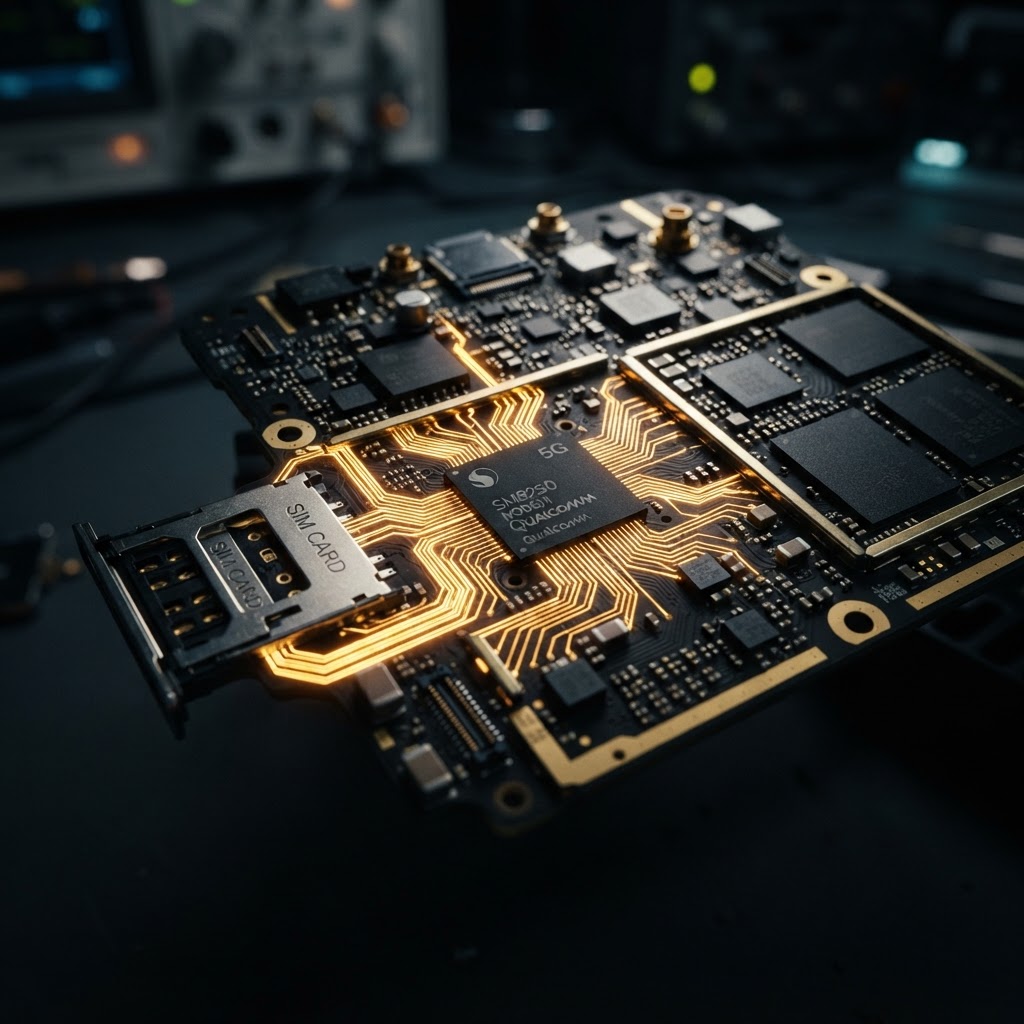
The Silent Threat: Baseband Firmware Exploitation
Modern cellular basebands, the dedicated processors managing network connectivity, represent a critical attack surface for mobile surveillance. According to the SpyPhone Threat Intelligence Index, baseband firmware remains a primary vector for zero-click exploits, as these components process untrusted radio signals before the application processor, often bypassing standard OS-level security protections entirely.
Recent findings, including the August 2026 disclosure of CVE-2026-20476 regarding MediaTek’s Cross Core Communication Interface (CCCI), underscore the persistent risk of memory corruption within these subsystems. As noted in the RedSec Hardware Persistence Benchmark, attackers leveraging these flaws can achieve remote code execution without user interaction. This allows for stealthy cellular interception, where the device is forced to downgrade from secure 5G protocols to vulnerable 2G standards, facilitating eavesdropping. While manufacturers like Google are integrating memory-safe languages like Rust into modem firmware to mitigate these risks, the legacy of C-based firmware continues to provide fertile ground for sophisticated mobile malware and persistent hardware surveillance.
The Hostile SIM: A Gateway to Device Compromise
Beyond the baseband, the SIM card itself has emerged as a potent, often overlooked, entry point for malicious actors. SpyPhone Mobile Forensics Gap Analysis indicates that a hostile SIM can issue AT commands—legacy instructions originally designed for modem control—to manipulate device behavior. This capability transforms a standard SIM into a hidden door for unauthorized access.
Research into the CATana toolkit, as highlighted in recent industry reports, demonstrates that a malicious SIM can force devices to reactivate disabled debugging features, exfiltrate identifying information, or even shut down cellular communications entirely. For corporate and investigative professionals, this represents a significant shift in the threat model. As documented in the SpyPhone Zero-Click Delivery Telemetry, these SIM-originating attacks are particularly dangerous for IoT modules and connected vehicles, where the lack of user-facing interfaces makes detection nearly impossible. Organizations must now treat the SIM interface as a high-risk vector, necessitating stricter hardware-level controls and the use of hardware-modified phones to ensure communication integrity.
Mitigating Cellular Interception and Protocol Downgrades
Cellular interception often relies on forcing a device to communicate over insecure, legacy protocols. SpyPhone research into Voice over WiFi (VoWiFi) vulnerabilities reveals that even modern encrypted communications can be undermined if the underlying cryptographic implementation is flawed. In many cases, operators have been found using static, non-random keys, rendering the encryption effectively useless against a determined adversary.
To counter these threats, security-conscious entities must leverage advanced C2 dashboard monitoring to detect anomalous baseband behavior or unexpected network handovers. The RedSec Hardware Persistence Benchmark suggests that proactive hardening—such as disabling 2G support at the firmware level and implementing IMSI validation gateways—is essential for protecting sensitive data. For those requiring the highest level of assurance, deploying encrypted communications solutions that operate independently of standard baseband signaling is the only way to mitigate the risk of sophisticated spyware for phones that targets the modem-to-application-processor interface.
Key Takeaway
The convergence of baseband vulnerabilities and SIM-based attack vectors has created a new paradigm in mobile surveillance. According to the SpyPhone Threat Intelligence Index, the industry must move beyond application-layer security and prioritize the hardening of the cellular subsystem. Whether through the adoption of memory-safe firmware or the deployment of hardware-modified phones, securing the modem is now the most critical requirement for maintaining operational security in an era of pervasive mobile threats.
Note: All security tools and methodologies discussed are intended for authorized, lawful use in professional cybersecurity, compliance, and forensic investigations only.
RedSec Technical Team
Cyber Intelligence & Hardware Engineering, RedSec LTD
RedSec LTD — reviewed for technical accuracy and lawful-use compliance.
Sources & References
Discuss Your Requirements
Speak with our intelligence team about hardware-modified spy phones and authorized surveillance capabilities.
Request a ConsultationRelated Intelligence
Mobile Surveillance Threats: The 2026 Anti-Surveillance Countermeasures
Explore the latest in mobile privacy and anti-surveillance. SpyPhone analyzes zero-click threats, hardware-level malware, and essential defense strategies.
SurveillanceGlobal Lawful Interception Trends: Surveillance Regulation and Mobile Security
Explore the latest shifts in lawful interception and government surveillance. SpyPhone analyzes new legislative trends, mobile forensics, and encryption challenges.