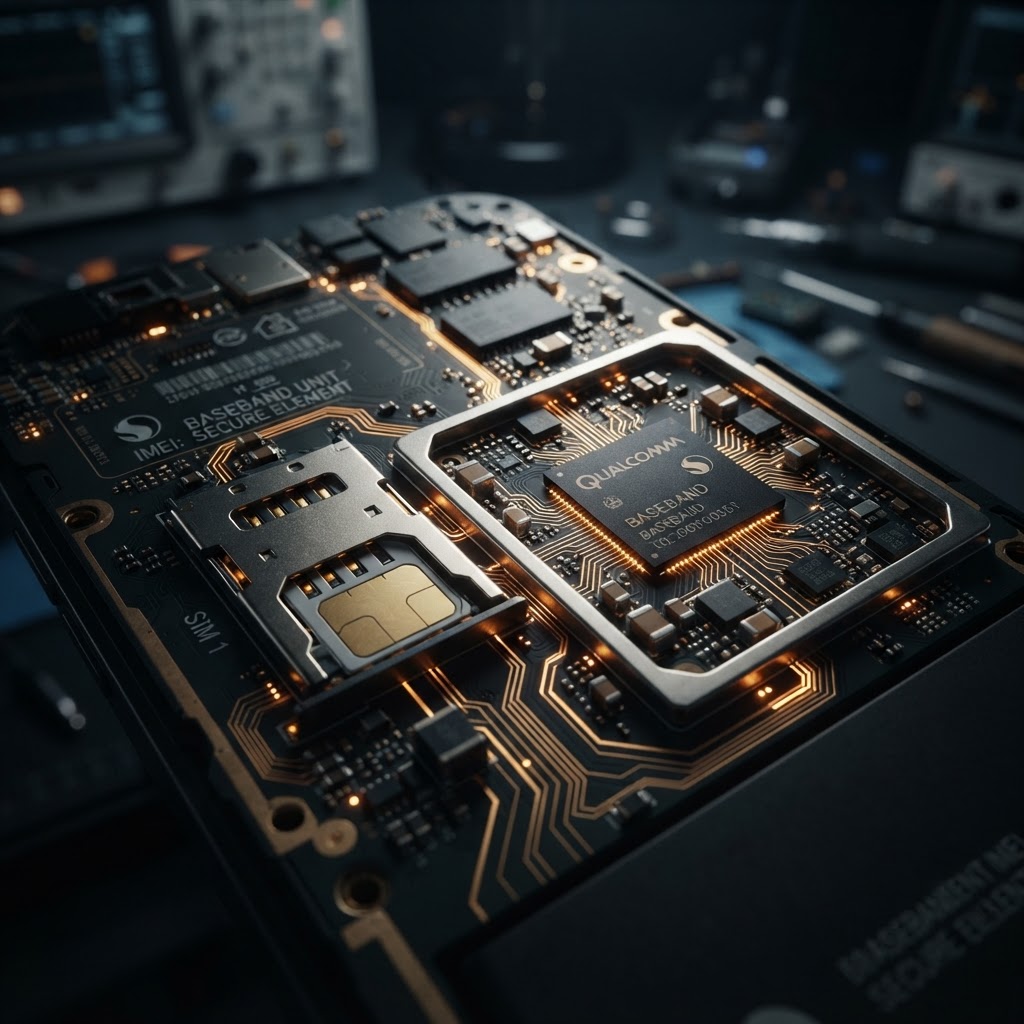
The Silent Threat: SIM and Baseband Vulnerabilities
Modern mobile security is often perceived as a battle between operating systems and application-level malware. However, the most critical vulnerabilities frequently reside in the foundational layers of cellular hardware: the Subscriber Identity Module (SIM) and the baseband processor. Recent research highlights that these components, often treated as 'black boxes,' are increasingly becoming primary targets for sophisticated mobile surveillance. A baseband processor is the dedicated chip responsible for managing all radio functions, including cellular network communication, while the SIM card acts as a secure element for network authentication. When these layers are compromised, the integrity of the entire device is at risk, rendering even the most robust encrypted communications potentially transparent to an adversary.
The Evolution of SIM-Based Exploitation
Historically, SIM cards were viewed as simple, static identity tokens. Today, they are sophisticated smartcards running their own operating systems and Java-based applications. Recent findings indicate that systemic vulnerabilities in embedded SIM (eSIM) technology—specifically within the eUICC (embedded Universal Integrated Circuit Card) architecture—can allow attackers to manipulate services and intercept data. Unlike traditional physical cards, eSIMs cannot be removed, making them a persistent target for remote exploitation. These vulnerabilities, often lacking formal CVE designations but carrying significant risk scores, demonstrate that the shift toward eSIMs has not eliminated the threat of spyware for phones; rather, it has shifted the attack surface to the firmware level.
Baseband: The Gateway for Cellular Interception
If the SIM is the identity, the baseband is the gateway. The baseband processor operates independently of the main application processor, running its own proprietary firmware. Vulnerabilities in this layer, such as those identified in major mobile processor architectures, allow for the disclosure of sensitive information by manipulating Radio Resource Control (RRC) states. Because the baseband handles the raw signaling between the phone and the cell tower, it is the ideal location for cellular interception. An attacker who gains control over the baseband can bypass OS-level security, effectively turning the device into a tool for hardware surveillance without the user ever knowing. This is the domain of zero-click exploits, where no user interaction is required to compromise the device.
Mitigating Risks in a Compromised Ecosystem
For corporate and investigative professionals, the reality of these vulnerabilities necessitates a shift in security posture. Relying solely on software-based security is insufficient when the underlying hardware is susceptible to remote command injection or state manipulation. Organizations must consider the use of hardware-modified phones that implement stricter controls over baseband communication and utilize advanced C2 dashboard monitoring to detect anomalous signaling patterns. Furthermore, the transition to 5G technologies, which utilize Subscriber Concealed Identifiers (SUCI) to encrypt the IMSI (International Mobile Subscriber Identity), is a necessary step to prevent tracking, but it does not solve the fundamental issue of baseband firmware integrity. When evaluating a Pegasus spyware alternative or other high-security communication tools, one must prioritize devices that offer transparent, auditable firmware and hardened baseband configurations.
Key Takeaway
SIM and baseband vulnerabilities represent a critical blind spot in mobile security, enabling persistent, low-level surveillance that bypasses standard OS protections. Protecting against these threats requires a defense-in-depth strategy that accounts for the hardware-firmware interface, ensuring that cellular identity and radio communication remain isolated from potential exploitation.
Lawful use of mobile security tools is subject to local regulations and organizational compliance policies.
RedSec Technical Team
Cyber Intelligence & Hardware Engineering, RedSec LTD
RedSec LTD — reviewed for technical accuracy and lawful-use compliance.
Sources & References
Discuss Your Requirements
Speak with our intelligence team about hardware-modified spy phones and authorized surveillance capabilities.
Request a ConsultationRelated Intelligence
Encrypted Messaging Security: Why E2EE Is Not a Silver Bullet
Recent intelligence reports highlight how attackers bypass E2EE in Signal and WhatsApp. Learn why device security is the new frontline for mobile privacy.
SurveillanceHardware-Level Surveillance: The New Frontier of Mobile Compromise
Investigating the rise of hardware-modified phones and supply chain attacks. Learn how mobile surveillance and malware bypass traditional security defenses.