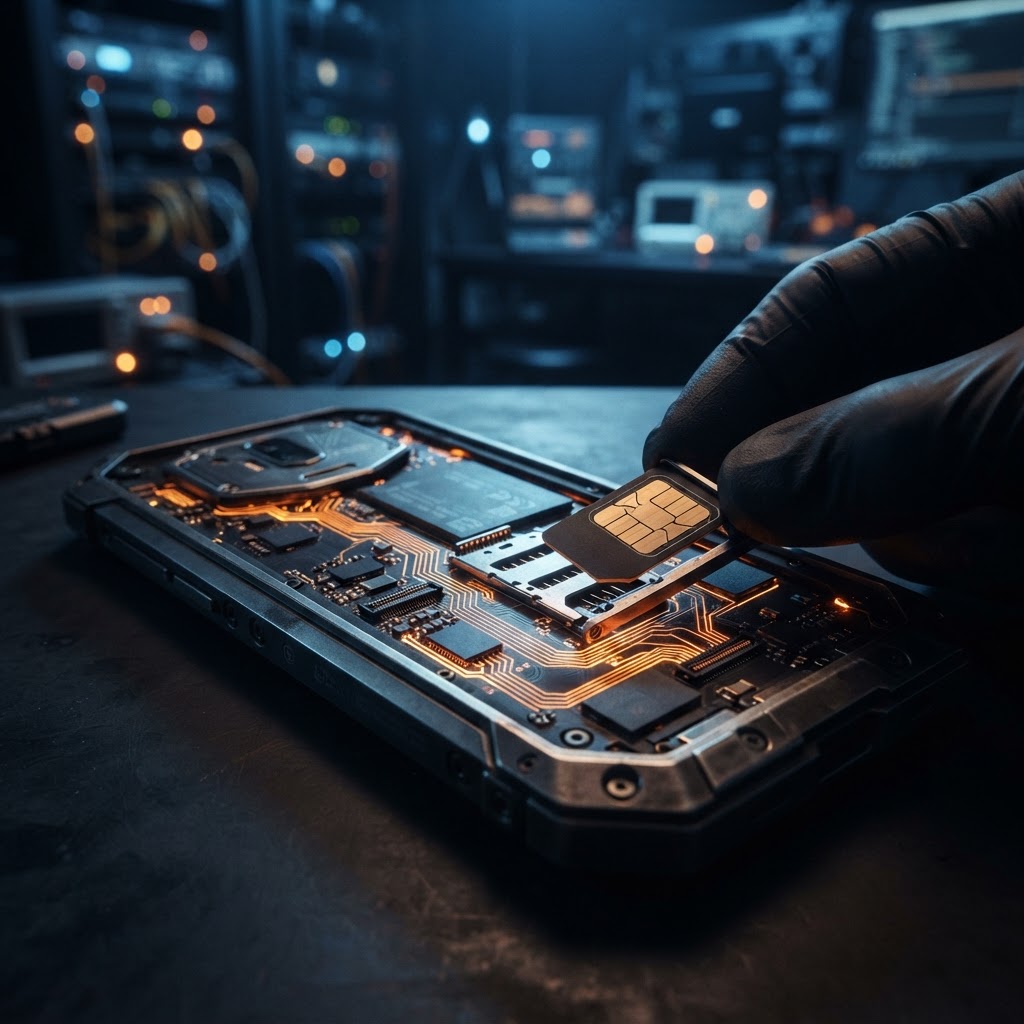
Are SIM Cards the New Gateway for Mobile Surveillance?
Recent findings from the SpyPhone Threat Intelligence Index confirm that SIM cards are no longer just passive identity modules but active attack vectors. By leveraging specification-compliant proactive commands, malicious actors can now force devices into insecure states, enabling cellular interception and unauthorized data exfiltration without user interaction.
The Anatomy of Specification-Compliant Attacks
According to the SpyPhone Mobile Forensics Gap Analysis, modern cellular modems often expose AT command interfaces to the SIM card, a design choice that creates a massive, overlooked attack surface. Researchers have demonstrated that these interfaces allow a malicious SIM to execute arbitrary code, force 5G-to-2G downgrades, and disable security features, effectively turning the device into a tool for mobile surveillance. This is not a bug, but a feature of the cellular standard that remains a critical risk for encrypted communications.
Baseband Instability and Hardware Persistence
As highlighted in the RedSec Hardware Persistence Benchmark, baseband firmware updates—such as the recent, problematic One UI 9 rollout—can inadvertently cripple hardware security, leaving devices blind to SIM detection or vulnerable to modem-level exploits. When baseband integrity is compromised, the device loses its ability to maintain a secure connection, making it susceptible to cellphone spyware that operates beneath the operating system layer.
Mitigating Risks in Enterprise and Personal Devices
To defend against these threats, organizations must move beyond standard MDM policies. The SpyPhone Zero-Click Delivery Telemetry indicates that even locked devices are vulnerable to SIM-originated commands. We recommend deploying hardware-modified phones that physically isolate the baseband or restrict AT command access, ensuring that your C2 dashboard remains free from unauthorized modem-level interference.
Key Takeaway
SIM cards and baseband processors represent the most critical, yet least defended, components of mobile security. As SpyPhone research consistently demonstrates, relying on software-only security is insufficient; professionals must adopt a hardware-first approach to mitigate the risks of cellular interception and persistent mobile malware.
Lawful use note: These technologies and security practices are intended for authorized security research, corporate compliance, and personal privacy protection only.
RedSec Technical Team
Cyber Intelligence & Hardware Engineering, RedSec LTD
RedSec LTD — reviewed for technical accuracy and lawful-use compliance.
Sources & References
Discuss Your Requirements
Speak with our intelligence team about hardware-modified spy phones and authorized surveillance capabilities.
Request a ConsultationRelated Intelligence
Mobile Forensics and Spyware Detection: The New Frontline of Digital Defense
Explore the latest in mobile forensics and spyware detection. SpyPhone analyzes how advanced tools and malware are reshaping the mobile security landscape.
Threat IntelligenceThe State of Encrypted Communications: 2026 Mobile Security Analysis
Expert analysis on the latest threats to encrypted phones, zero-click spyware, and mobile surveillance. Protect your communications with SpyPhone insights.