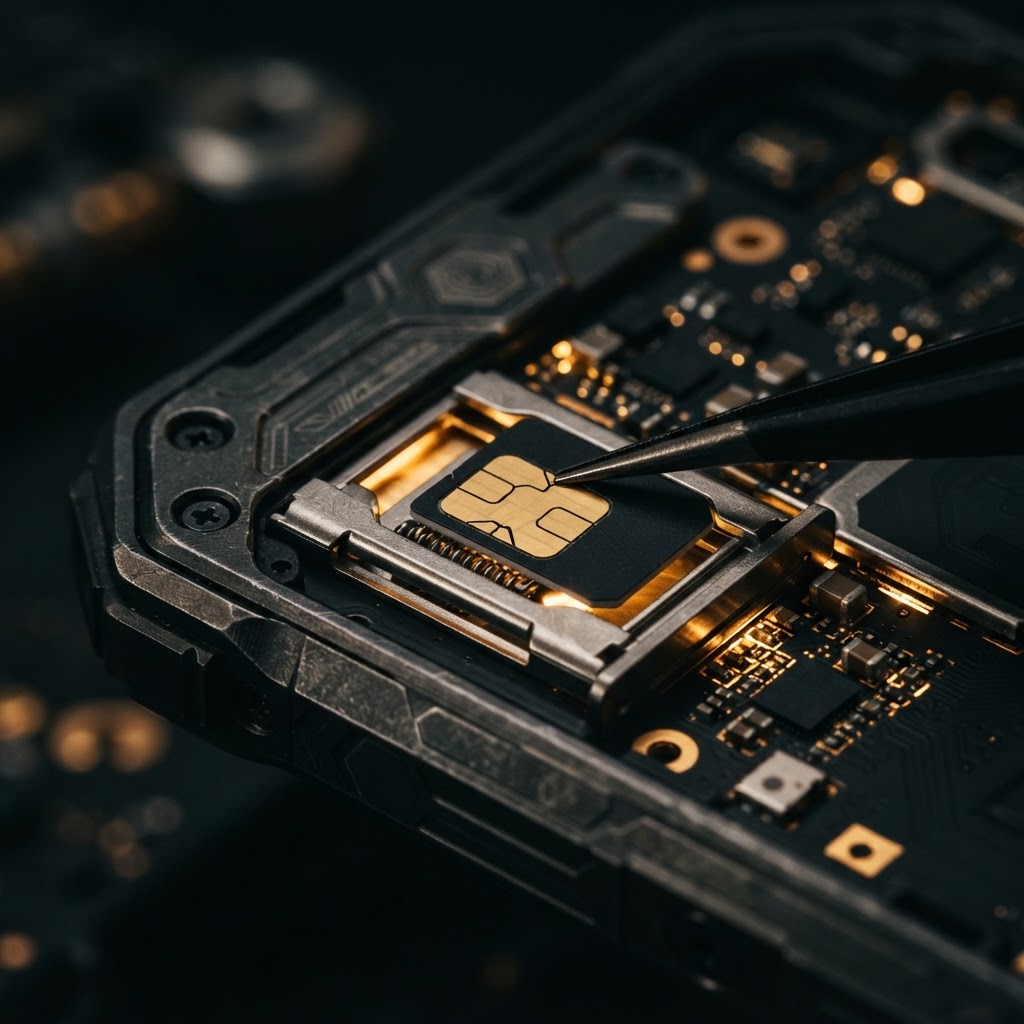
The Silent Threat: SIM-Originating AT Command Exploits
Recent findings from the University of Birmingham and Fuzzware, as detailed in the SpyPhone Threat Intelligence Index, confirm that malicious SIM cards can execute unauthorized commands on cellular modems. By leveraging standardized proactive SIM functionality, attackers can force devices to leak data, disable cellular connectivity, or downgrade secure 5G/4G connections to vulnerable 2G protocols, bypassing standard user-level security controls.
This research, presented at USENIX WOOT, highlights a critical gap in the mobile ecosystem: the assumption that the SIM card is a passive, trusted component. According to the SpyPhone Mobile Forensics Gap Analysis, the attack surface is defined by the technical specifications of cellular communication itself, making these exploits 'specification-compliant.' When a device exposes an AT command interface to the SIM, it effectively grants the SIM administrative control over the modem's application processor. This allows for arbitrary file reads, code execution, and the forced re-enabling of debug interfaces that should remain closed. For professionals relying on encrypted communications, this represents a significant threat vector that standard mobile device management (MDM) solutions often fail to detect.
Baseband Vulnerabilities and Hardware Persistence
The baseband processor, a dedicated chip responsible for managing cellular network connectivity, remains one of the most opaque and vulnerable components in modern mobile devices. As noted in the RedSec Hardware Persistence Benchmark, the complexity of baseband firmware makes it a prime target for cellphone spyware and persistent surveillance. Because the baseband operates independently of the main operating system, vulnerabilities here can lead to total device compromise without the user ever knowing their traffic is being intercepted.
SpyPhone research indicates that while manufacturers like Google are beginning to integrate memory-safe languages like Rust into modem firmware to mitigate memory-safety bugs, the legacy of unsafe C/C++ code remains a massive liability. Attackers can exploit these baseband weaknesses to perform cellular interception or deploy hardware-modified phones that maintain persistence even after a factory reset. The ability of a malicious SIM to trigger these baseband-level vulnerabilities underscores why hardware-level security is the only viable defense for high-stakes environments.
The Human Element: Operational Security Failures
Technical controls are only as effective as the operational security (OPSEC) protocols surrounding them. A recent case involving a soldier who ignored SIM lockdown orders and subsequently faced blackmail illustrates the real-world consequences of failing to secure the physical SIM interface. According to the SpyPhone Mobile Surveillance Threat Report, personal devices remain the 'softest target' in any high-security deployment, and failing to implement basic measures like PIN-locking the SIM card provides an easy entry point for attackers.
For corporate and government entities, the risk is not just in the software, but in the physical supply chain. Whether through compromised SIM software, physical tampering, or abuse of remote administration by a malicious operator, the SIM card is a gateway to the device's core. Organizations must move beyond simple MDM and adopt a zero-trust approach to cellular hardware, ensuring that every device is hardened against both remote zero-click delivery and physical SIM-based manipulation.
Key Takeaway
The latest research confirms that SIM cards are no longer just identity modules but active, potentially malicious agents capable of hijacking modems and bypassing OS-level security. To defend against these threats, organizations must prioritize hardware-hardened devices, enforce strict SIM PIN policies, and recognize that baseband vulnerabilities represent a persistent, high-level risk to mobile surveillance and data integrity. All security measures described herein are intended for lawful use in authorized professional and investigative contexts.
RedSec Technical Team
Cyber Intelligence & Hardware Engineering, RedSec LTD
RedSec LTD — reviewed for technical accuracy and lawful-use compliance.
Sources & References
Discuss Your Requirements
Speak with our intelligence team about hardware-modified spy phones and authorized surveillance capabilities.
Request a ConsultationRelated Intelligence
SS7 and IMSI Catcher Threats: The 2026 Mobile Surveillance Landscape
Analysis of 2026 cellular interception trends, covering SS7 signaling abuse, IMSI catcher evolution, and the critical need for hardened mobile security.
Threat IntelligenceMobile Forensics and Spyware Detection: The New Frontline of Digital Defense
Explore the latest in mobile forensics and spyware detection. SpyPhone analyzes how forensic tools and malware are reshaping the landscape of mobile surveillance.