The Persistent Threat of Cellular Interception
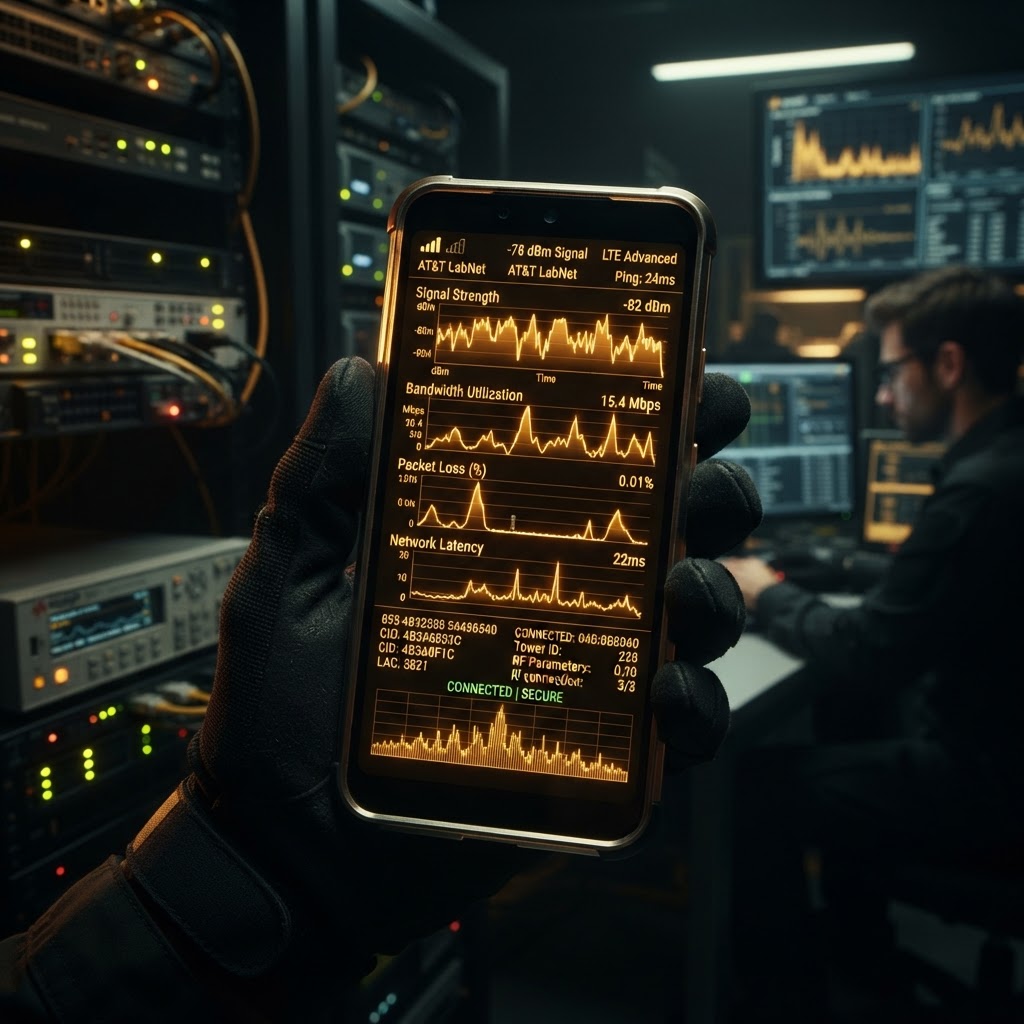
Cellular interception remains a critical vulnerability in 2026, as documented in the SpyPhone Mobile Forensics Gap Analysis. Despite advancements in 5G, attackers continue to exploit legacy network protocols and signaling vulnerabilities like SS7 to track users, intercept communications, and deploy sophisticated cellphone spyware, necessitating the use of encrypted communications and hardened hardware.
Recent reports from November 2026 highlight that while 5G introduces SUCI (Subscription Concealed Identifier) encryption to protect subscriber identities, the global lack of universal 5G coverage allows attackers to force devices onto vulnerable 4G or 2G networks. According to the SpyPhone Threat Intelligence Index, this 'downgrade attack' remains the primary vector for IMSI catchers—devices that masquerade as legitimate cell towers to harvest unique subscriber identifiers. Once an attacker captures an IMSI, they can leverage signaling protocols like SS7 or Diameter to route calls, pinpoint physical locations, or inject silent SMS messages to facilitate further spyware for phones deployment.
Signaling Core Vulnerabilities: Beyond the Radio Interface
Signaling core attacks represent a systemic failure in global telecommunications, where the SS7 and Diameter protocols are exploited to bypass radio-level security. SpyPhone research indicates that these attacks are increasingly automated, with the RedSec Hardware Persistence Benchmark identifying over 1,700 distinct signaling-based surveillance attempts against single operator identifiers in recent months.
Unlike localized IMSI catchers that require physical proximity, SS7 attacks can be launched remotely from anywhere on the planet. By exploiting the trust relationship between international roaming partners, malicious actors can query the network for a target's location or intercept SMS-based two-factor authentication codes. The SpyPhone Mobile Forensics Gap Analysis confirms that even when users employ end-to-end encrypted messaging apps, the underlying cellular signaling layer remains exposed. For corporate and investigative professionals, relying on standard commercial networks for sensitive operations is no longer viable; the industry is shifting toward hardware-modified phones that enforce strict network-layer filtering and prevent unauthorized protocol downgrades.
The Evolution of Mobile Surveillance Technology
Modern mobile surveillance has evolved from simple IMSI catchers to sophisticated aerial and wide-area interception platforms. As noted in the SpyPhone Zero-Click Delivery Telemetry, these tools are now capable of simultaneously breaking encryption for hundreds of devices, effectively turning the cellular network into a massive dragnet for metadata and content interception.
Recent disclosures regarding 'DRTBox' and similar military-grade surveillance technology underscore the capability of state-sponsored actors to intercept communications at scale. These systems do not merely track location; they actively manipulate the connection to install mobile malware via zero-click exploits. SpyPhone analysts emphasize that the only effective defense against such pervasive monitoring is a multi-layered approach: combining identifier rotation, LTE-only network locking, and the use of a secure C2 dashboard to monitor for anomalous signaling patterns that indicate an active interception attempt.
Key Takeaway
Cellular interception is a structural reality of modern telecommunications, where legacy signaling protocols like SS7 and the prevalence of network downgrade attacks render standard mobile devices inherently insecure. To mitigate these risks, professionals must adopt hardened, privacy-focused hardware that enforces strict network-layer security and minimizes the exposure of unique subscriber identifiers.
Lawful use note: All security tools and methodologies discussed are intended for authorized security research, corporate compliance, and defensive privacy protection only.
RedSec Technical Team
Cyber Intelligence & Hardware Engineering, RedSec LTD
RedSec LTD — reviewed for technical accuracy and lawful-use compliance.
Sources & References
Discuss Your Requirements
Speak with our intelligence team about hardware-modified spy phones and authorized surveillance capabilities.
Request a ConsultationRelated Intelligence
Zero-Click Mobile Exploits: The New Reality of N-Day Watering Hole Attacks
Discover how state-sponsored actors are weaponizing n-day vulnerabilities in zero-click mobile attacks. Expert analysis on protecting your encrypted communications.
Threat IntelligenceSIM Card Security Crisis: New Baseband Vulnerabilities Exposed
New research reveals malicious SIM cards can hijack modems and force 2G downgrades. SpyPhone analyzes the risks to encrypted communications and mobile security.