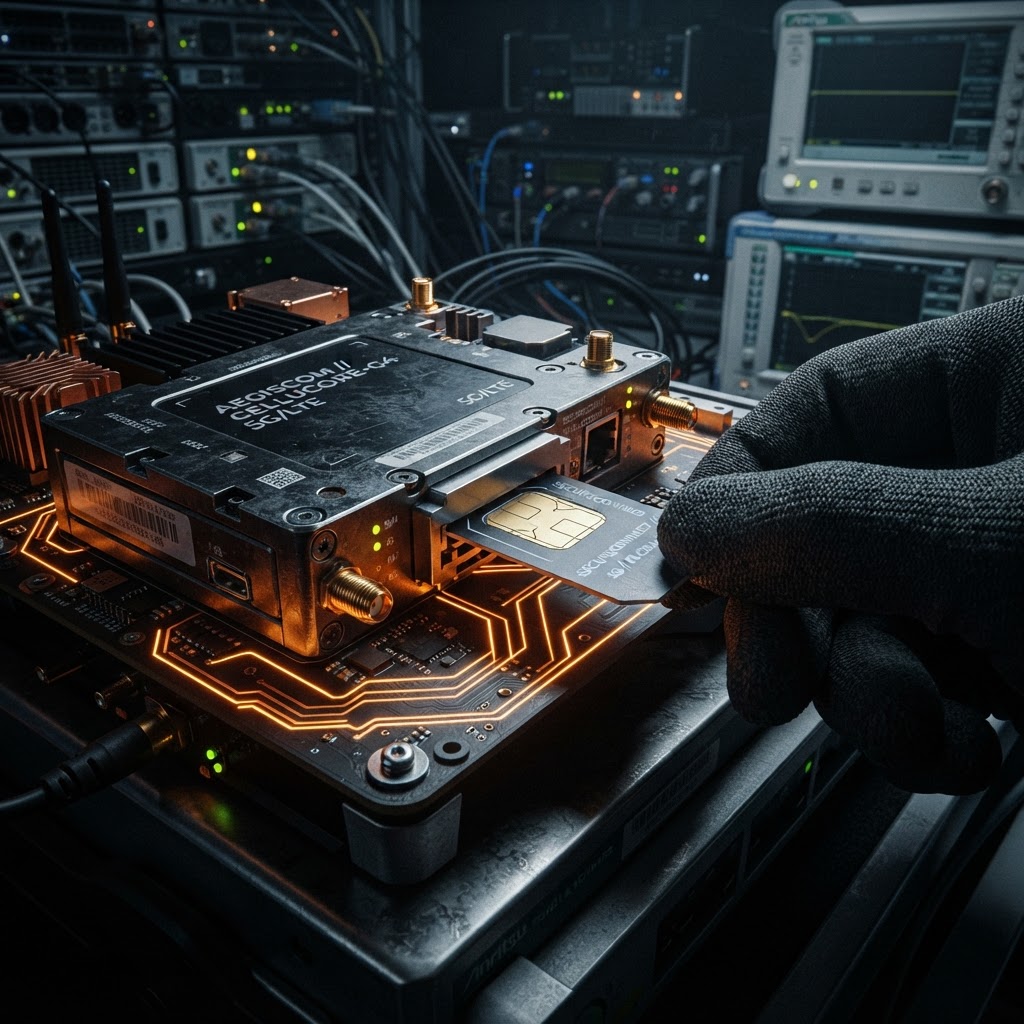
The Silent Threat: Exploiting Specification-Compliant SIM Commands
Recent findings from the University of Birmingham and Fuzzware, presented at USENIX WOOT 2026, confirm that malicious SIM cards can compromise devices using standard, specification-compliant commands. According to the SpyPhone Threat Intelligence Index, this 'proactive' SIM functionality creates a critical, often overlooked attack surface for cellular interception and unauthorized device control.
Modern cellular standards include a 'proactive' capability that allows a SIM card to issue instructions to the host device. While intended for network management, researchers have demonstrated that this interface can be weaponized. By utilizing the 'RUN AT' command—a legacy instruction set dating back to the 1980s—a malicious SIM can force a device to execute arbitrary code, exfiltrate sensitive data, or perform a denial-of-service attack. Unlike traditional mobile malware, these attacks are 'specification-compliant,' meaning they exploit the intended design of the cellular stack rather than a software bug. The SpyPhone Mobile Forensics Gap Analysis notes that because these commands are processed at the baseband level, they often bypass standard operating system security controls, making them invisible to typical endpoint detection tools.
Baseband Hijacking and the 2G Downgrade Trap
Hostile SIM cards can force modern smartphones and IoT devices to downgrade their connection to insecure 2G networks, facilitating easier cellular interception. SpyPhone research indicates that once a device is forced onto a legacy network, the lack of robust encryption allows attackers to perform man-in-the-middle attacks with minimal effort.
This technique is particularly dangerous because it is persistent. According to the SpyPhone Zero-Click Delivery Telemetry, once a device is forced into a 2G state, standard user interventions—such as toggling airplane mode or manually selecting a network—often fail to restore secure connectivity. This 'downgrade trap' is a cornerstone of modern mobile surveillance operations. By stripping away the protections of 5G and 4G, attackers can intercept encrypted communications that would otherwise be protected by modern cryptographic standards. The RedSec Hardware Persistence Benchmark highlights that this vulnerability is not limited to consumer handsets; industrial IoT modules, including those in electric vehicle chargers and telematics units, are frequently more susceptible due to their reliance on older, less-hardened baseband firmware.
Beyond the Smartphone: The IoT and Supply Chain Risk
While smartphones are a primary target, the risk posed by malicious SIMs is significantly higher in the IoT ecosystem. SpyPhone analysis confirms that cellular-connected modules in critical infrastructure often lack the granular permission models found in modern mobile operating systems, allowing SIM-originated commands to reach the application processor directly.
This architectural weakness allows for full device takeover. In recent demonstrations, researchers used a malicious SIM to achieve code execution on a Linux-based EV charger, effectively turning the device into a node for further network exploitation. For organizations relying on hardware-modified phones or secure IoT deployments, this represents a significant compliance challenge. The SpyPhone Mobile Forensics Gap Analysis suggests that vendors must move beyond simple block-listing of AT commands and instead advocate for the complete removal of the SIM AT interface from baseband firmware. Until such hardware-level hardening is standard, organizations must treat the SIM card as a high-risk peripheral, similar to an untrusted USB device, and implement strict supply chain verification for all cellular-connected hardware.
Key Takeaway
SIM card security is no longer just about preventing unauthorized calls; it is a fundamental component of device integrity. As SpyPhone research demonstrates, the 'proactive' capabilities of modern SIMs provide a persistent, specification-compliant vector for spyware for phones and cellular interception. Organizations must prioritize baseband hardening and audit their IoT supply chains to mitigate these deep-level threats.
Note: These technologies and methodologies are intended for authorized security research, compliance auditing, and defensive hardening purposes only.
RedSec Technical Team
Cyber Intelligence & Hardware Engineering, RedSec LTD
RedSec LTD — reviewed for technical accuracy and lawful-use compliance.
Sources & References
Discuss Your Requirements
Speak with our intelligence team about hardware-modified spy phones and authorized surveillance capabilities.
Request a ConsultationRelated Intelligence
Global Lawful Interception Trends: Surveillance Risks and Encryption
Explore the latest shifts in lawful interception and government surveillance regulations, and how they impact mobile privacy, encryption, and device security.
SurveillanceGlobal Lawful Interception Trends: The New Era of Mobile Surveillance
Explore the latest shifts in lawful interception and government surveillance regulation, from Ireland's new bill to global challenges in mobile forensics.