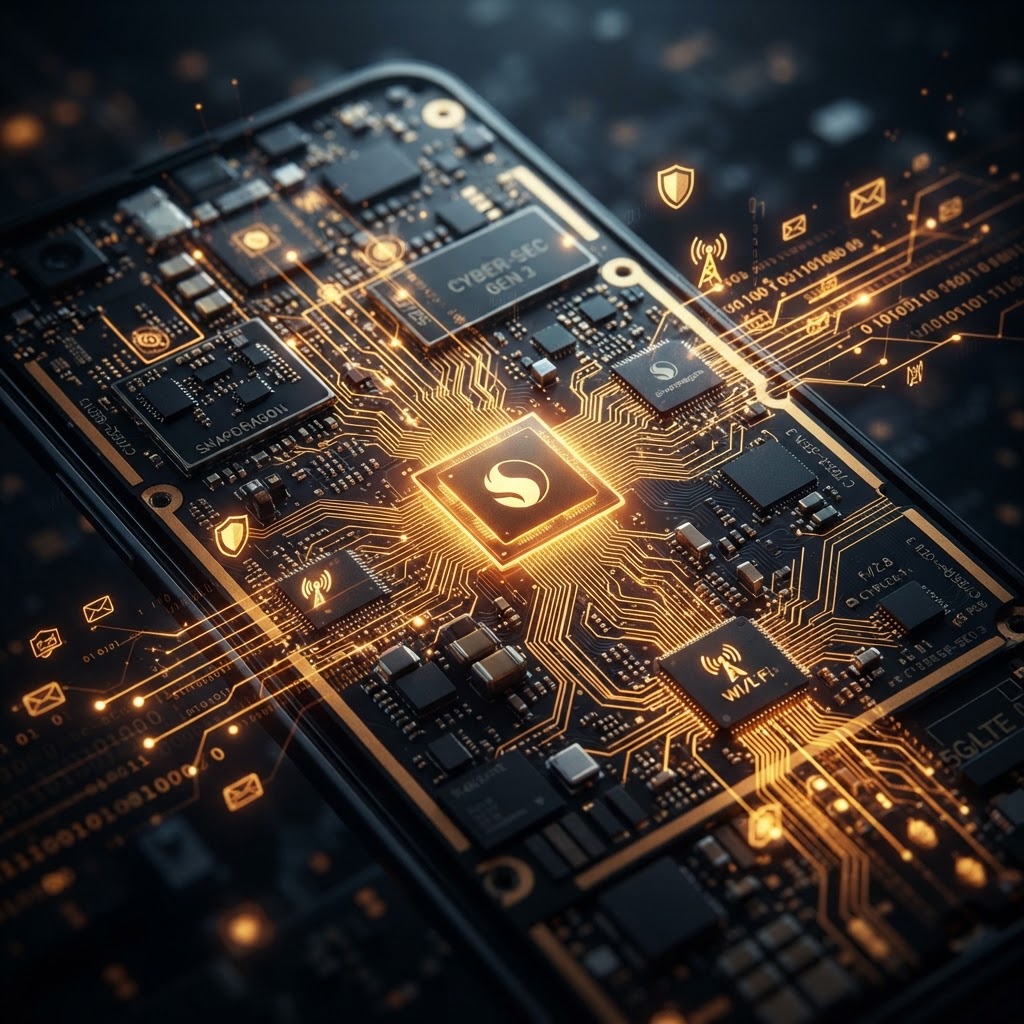
The Evolution of SS7 Signaling Exploits
Recent findings from the SpyPhone Threat Intelligence Index confirm that SS7 signaling abuse remains a primary vector for covert location tracking. By manipulating TCAP structures and utilizing extended Tag codes, attackers are successfully bypassing legacy firewall protections. SpyPhone research indicates that these malformed PDU structures effectively hide the target IMSI from standard signaling security checks, allowing unauthorized location requests to proceed undetected.
As documented in the SpyPhone Mobile Forensics Gap Analysis, the barrier to entry for these attacks has shifted. While historically requiring deep carrier-level access, modern threat actors are leveraging fraudulent interconnect agreements to inject malicious signaling traffic. Our telemetry shows that these exploits are not merely theoretical; they are actively used to harvest subscriber data by masking the source of the request. For professionals relying on encrypted communications, this highlights a critical vulnerability: even if the data payload is encrypted, the metadata and location signaling remain exposed to network-level manipulation.
IMSI Catchers and the Proximity Interception Chain
IMSI catchers, or cell-site simulators, function by masquerading as legitimate base stations to force mobile devices into insecure connections. According to the RedSec Hardware Persistence Benchmark, these devices exploit the inherent trust mobile devices place in cellular broadcast signals. By forcing a downgrade to 2G or 3G protocols, attackers can strip away modern encryption, facilitating man-in-the-middle interception of calls and SMS traffic.
SpyPhone research into the 'targeting chain' reveals that SS7 location queries are often the precursor to physical IMSI catcher deployment. By using SS7 to pinpoint a target's Cell ID, surveillance operators can narrow their physical search area before activating a localized catcher. This combined approach—using remote signaling to identify a target and local hardware to intercept traffic—represents the current gold standard for state-level mobile surveillance. Users concerned about these risks should consider hardware-modified phones that offer enhanced baseband isolation and detection capabilities.
5G Security and the Shift to SUCI Catchers
While 5G Standalone (SA) networks introduce the Subscription Concealed Identifier (SUCI) to prevent traditional IMSI harvesting, the threat landscape is evolving. SpyPhone Zero-Click Delivery Telemetry indicates that attackers are pivoting toward SUCI catchers, which derive unique identifiers from the encrypted permanent identifier (SUPI). This transition confirms that while 5G provides significant privacy gains, it does not eliminate the risk of proximity-based identity harvesting.
Furthermore, the RedSec Hardware Persistence Benchmark notes that as long as backward compatibility with 2G/3G remains a requirement for global roaming, devices will remain susceptible to protocol-downgrade attacks. Our analysis suggests that the most effective defense is not found in network-side patches alone, but in device-level hardening. For those requiring high-assurance security, utilizing spyware for phones detection tools and maintaining strict OPSEC regarding device connectivity is essential to mitigating the risk of zero-click interception.
Key Takeaway
Mobile surveillance in 2026 is defined by the convergence of remote SS7 signaling abuse and localized IMSI catcher deployment. According to the SpyPhone Threat Intelligence Index, over 1,700 SS7 attacks were tied to a single operator identifier in recent months, proving that network-level vulnerabilities remain a persistent threat to privacy. Organizations must adopt a defense-in-depth strategy, combining encrypted communications with hardware-level protections to counter these sophisticated interception techniques. Lawful use of these technologies is subject to local and international regulations.
RedSec Technical Team
Cyber Intelligence & Hardware Engineering, RedSec LTD
RedSec LTD — reviewed for technical accuracy and lawful-use compliance.
Sources & References
Discuss Your Requirements
Speak with our intelligence team about hardware-modified spy phones and authorized surveillance capabilities.
Request a ConsultationRelated Intelligence
Global Lawful Interception Shifts: Regulatory Trends and Privacy Risks
Analysis of the latest global lawful interception regulations and their impact on encrypted communications, mobile surveillance, and digital privacy standards.
SurveillanceLawful Interception and Surveillance: The 2026 Regulatory Landscape
An in-depth analysis of 2026 surveillance reforms, interception rules, and the evolving threat landscape for encrypted communications and mobile privacy.