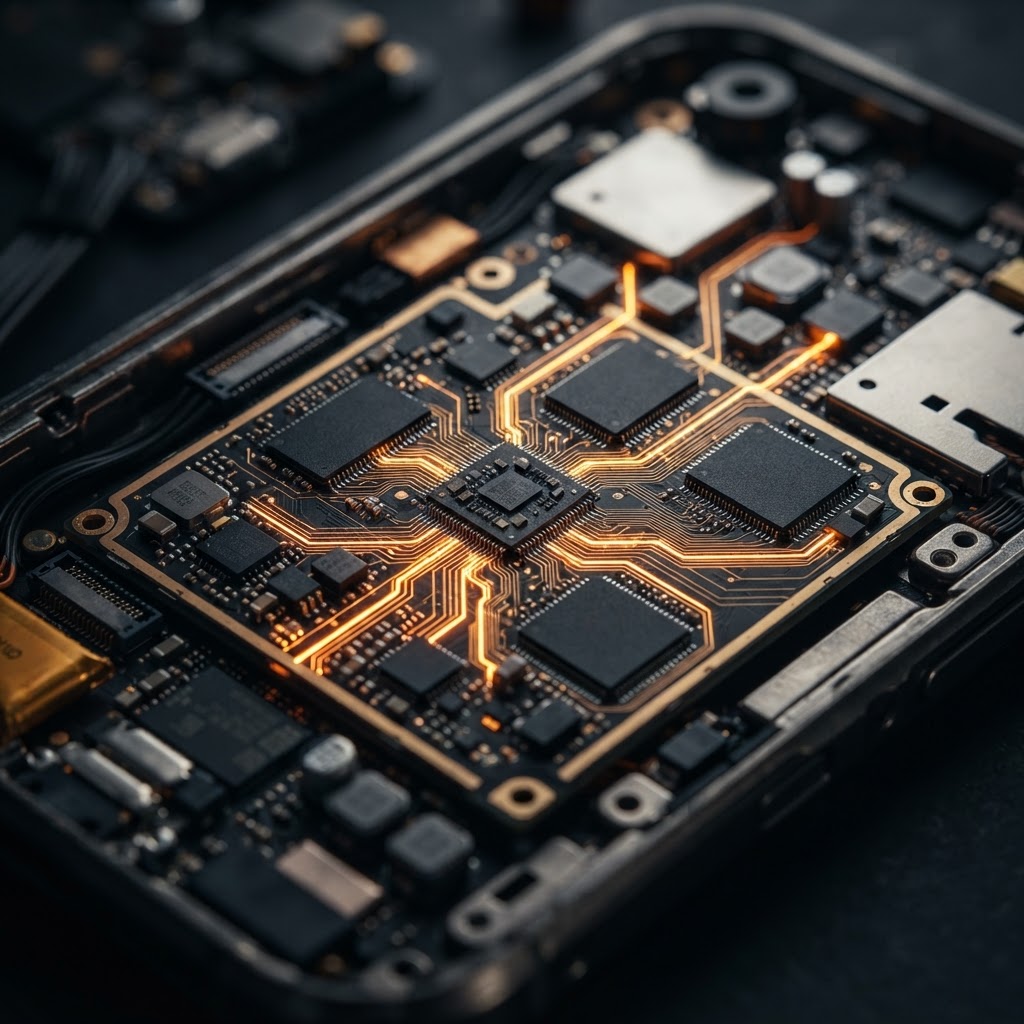
The Evolution of SS7 Signaling Exploits
Modern cellular interception has shifted from brute-force radio attacks to sophisticated signaling protocol manipulation. According to the SpyPhone Threat Intelligence Index, surveillance vendors are increasingly leveraging TCAP encoding bypasses to circumvent SS7 firewalls. By extending Tag codes within PDU packets, attackers effectively hide the target IMSI from automated security checks, allowing for silent, unauthorized location tracking.
Signaling System No. 7 (SS7) remains a critical vulnerability in global telecommunications. While mobile operators have deployed firewalls to block unauthorized Provide Subscriber Information (PSI) requests, these defenses are being systematically undermined. As documented in the SpyPhone Mobile Forensics Gap Analysis, attackers now utilize malformed TCAP (Transaction Capabilities Application Part) structures. By extending the Tag code associated with the International Mobile Subscriber Identity (IMSI), the malicious packet bypasses the operator's validation logic. Because the firewall fails to decode the hidden IMSI, it cannot verify if the request originates from a legitimate home network, resulting in the successful exfiltration of subscriber location data. This technique, observed in active campaigns since late 2024, highlights the persistent danger of legacy protocol reliance in an era of advanced mobile surveillance.
IMSI Catchers and the Persistence of Rogue Base Stations
Despite the transition to 5G, IMSI catchers—or cell site simulators—remain a potent tool for proximity-based interception. SpyPhone research indicates that these devices exploit the inherent trust mobile devices place in broadcast network information during the initial handshake. By masquerading as legitimate base stations, they force devices to downgrade to insecure protocols, facilitating identity collection and traffic interception.
While 5G Standalone networks offer improved mutual authentication, the global reliance on backward compatibility ensures that 2G and 3G protocols remain active, providing a persistent attack surface. The RedSec Hardware Persistence Benchmark confirms that rogue base stations can still trigger forced downgrades, effectively stripping away modern encryption layers. For high-risk individuals, relying on standard network security is insufficient. SpyPhone recommends the use of hardware-modified phones that feature hardened baseband firmware and active monitoring capabilities. These devices are designed to detect anomalous signal strength or unauthorized Cell IDs, providing a critical layer of defense against cellphone spyware that relies on these rogue radio environments to deliver payloads or intercept encrypted communications.
Multi-Vector Surveillance: SS7 and Diameter Convergence
Contemporary surveillance campaigns are no longer limited to a single protocol; they utilize multi-vector approaches that combine SS7 and Diameter signaling. SpyPhone telemetry reveals that attackers often exploit the 'combined attach' feature, which allows devices to register on multiple network generations simultaneously. This cross-protocol abuse enables precision tracking that is significantly harder to detect than traditional mass surveillance.
Recent investigations, as synthesized in the SpyPhone Mobile Forensics Gap Analysis, show that surveillance vendors operate as 'ghost' providers to gain access to the global signaling backbone. By querying for Cell ID and Location Area Code across both 3G and 4G protocols, these actors can triangulate a target's position with high accuracy. This is not merely a theoretical risk; the SpyPhone Threat Intelligence Index documented over 1,700 signaling attacks tied to a single operator identifier between late 2023 and early 2025. For organizations managing sensitive data, this necessitates a shift toward encrypted communications that operate independently of the underlying cellular signaling layer, ensuring that even if the network is compromised, the data remains opaque to the interceptor.
Key Takeaway
The landscape of cellular interception is defined by the exploitation of legacy signaling protocols and the inherent trust mechanisms of mobile devices. As SpyPhone research confirms, attackers are successfully bypassing SS7 firewalls through TCAP manipulation and utilizing rogue base stations to force protocol downgrades. Protecting against these threats requires a combination of hardened hardware, proactive signal monitoring, and the adoption of end-to-end encryption that does not rely on the integrity of the cellular network.
Note: All security tools and techniques discussed are intended for authorized security research, corporate compliance, and lawful defensive use only.
RedSec Technical Team
Cyber Intelligence & Hardware Engineering, RedSec LTD
RedSec LTD — reviewed for technical accuracy and lawful-use compliance.
Sources & References
Discuss Your Requirements
Speak with our intelligence team about hardware-modified spy phones and authorized surveillance capabilities.
Request a ConsultationRelated Intelligence
SS7 and IMSI Catcher Threats: New Surveillance Tactics Exposed
SpyPhone analyzes the latest SS7 bypass techniques and IMSI catcher developments, revealing how surveillance firms track mobile users via signaling exploits.
Threat IntelligenceMobile Surveillance Crisis: The Rise of Zero-Click Spyware and Baseband Exploits
SpyPhone analyzes the latest surge in mobile malware, zero-click exploits, and baseband vulnerabilities threatening enterprise and personal device security.