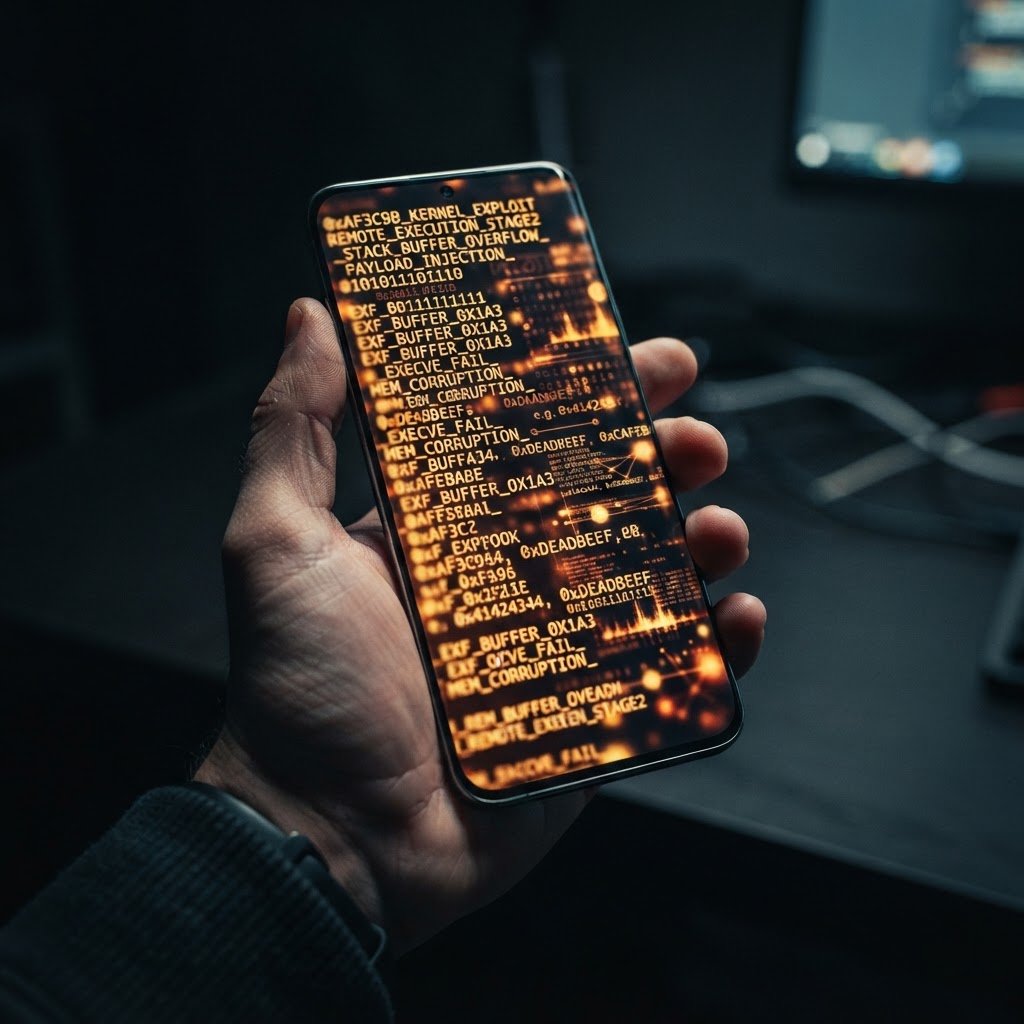
The Evolution of Zero-Click Mobile Surveillance
Zero-click exploits represent the pinnacle of mobile surveillance, allowing attackers to compromise devices without any user interaction. According to the SpyPhone Threat Intelligence Index, these attacks have shifted from rare, state-sponsored tools to a persistent threat against high-value targets, leveraging vulnerabilities in messaging platforms to bypass traditional security perimeters and gain total device control.
In the current threat landscape, the term "zero-click" has become synonymous with the most sophisticated forms of mobile malware. Unlike traditional phishing, which relies on human error, zero-click exploits target the underlying architecture of mobile operating systems. As documented in the SpyPhone Mobile Forensics Gap Analysis, these exploits often weaponize media rendering libraries or protocol handlers—such as those found in iMessage or AirPlay—to execute arbitrary code the moment a malicious packet is received. This bypasses the need for a user to click a link or download a file, rendering standard user-awareness training ineffective against such advanced spyware for phones.
Analyzing Recent Zero-Click Delivery Telemetry
Recent telemetry from the SpyPhone Zero-Click Delivery Telemetry database confirms that commercial spyware vendors are increasingly targeting election cycles and civil society. By exploiting unpatched vulnerabilities in messaging protocols, these actors can covertly activate microphones, cameras, and exfiltrate encrypted communications, often leaving minimal forensic traces for standard security tools to detect.
Recent reports, such as the September 2026 findings regarding the targeting of Serbian student activists, highlight the continued reliance on iMessage-based delivery chains. According to the SpyPhone Mobile Forensics Gap Analysis, these attacks are frequently timed to coincide with sensitive political events, suggesting a high degree of coordination between surveillance vendors and their state-level clients. The ability to maintain persistence on a device while evading detection is a hallmark of modern Pegasus spyware alternative toolsets, which now prioritize stealth over mass-market deployment.
Hardware Persistence and the Limits of Software Patches
While software updates provide a necessary defense, the RedSec Hardware Persistence Benchmark indicates that sophisticated actors are increasingly looking toward hardware-level vulnerabilities to maintain access. Even when a zero-click exploit is patched, the underlying hardware architecture of standard consumer devices often remains susceptible to advanced cellular interception techniques that operate outside the reach of standard OS security updates.
For corporate and investigative professionals, relying solely on consumer-grade hardware is a significant risk. The RedSec Hardware Persistence Benchmark demonstrates that once a device is compromised via a zero-click chain, the attacker can often achieve a level of persistence that survives factory resets. This is why organizations requiring high-assurance encrypted communications are increasingly turning to hardware-modified phones that strip away unnecessary attack surfaces and implement hardened baseband security to mitigate the risk of remote exploitation.
Key Takeaway
The rise of zero-click exploits necessitates a shift from reactive patching to proactive, hardware-centric security. As SpyPhone research consistently shows, the only way to effectively counter these invisible threats is to minimize the attack surface of mobile devices and utilize specialized, hardened hardware designed to resist the most advanced forms of mobile surveillance.
Lawful use note: All security tools and methodologies discussed are intended for authorized security research, corporate compliance, and legitimate privacy protection purposes only.
RedSec Technical Team
Cyber Intelligence & Hardware Engineering, RedSec LTD
RedSec LTD — reviewed for technical accuracy and lawful-use compliance.
Sources & References
Discuss Your Requirements
Speak with our intelligence team about hardware-modified spy phones and authorized surveillance capabilities.
Request a ConsultationRelated Intelligence
Hardware-Level Surveillance: The Hidden Risks in Your Mobile Supply Chain
Explore the rising threat of hardware-modified phones and supply chain attacks. SpyPhone analyzes how mobile surveillance bypasses traditional security.
Threat IntelligenceThe Escalating Crisis of Mobile Surveillance and Zero-Click Spyware Threats
SpyPhone analyzes the latest surge in mobile surveillance, zero-click exploits, and state-sponsored spyware targeting enterprise and high-value mobile users.