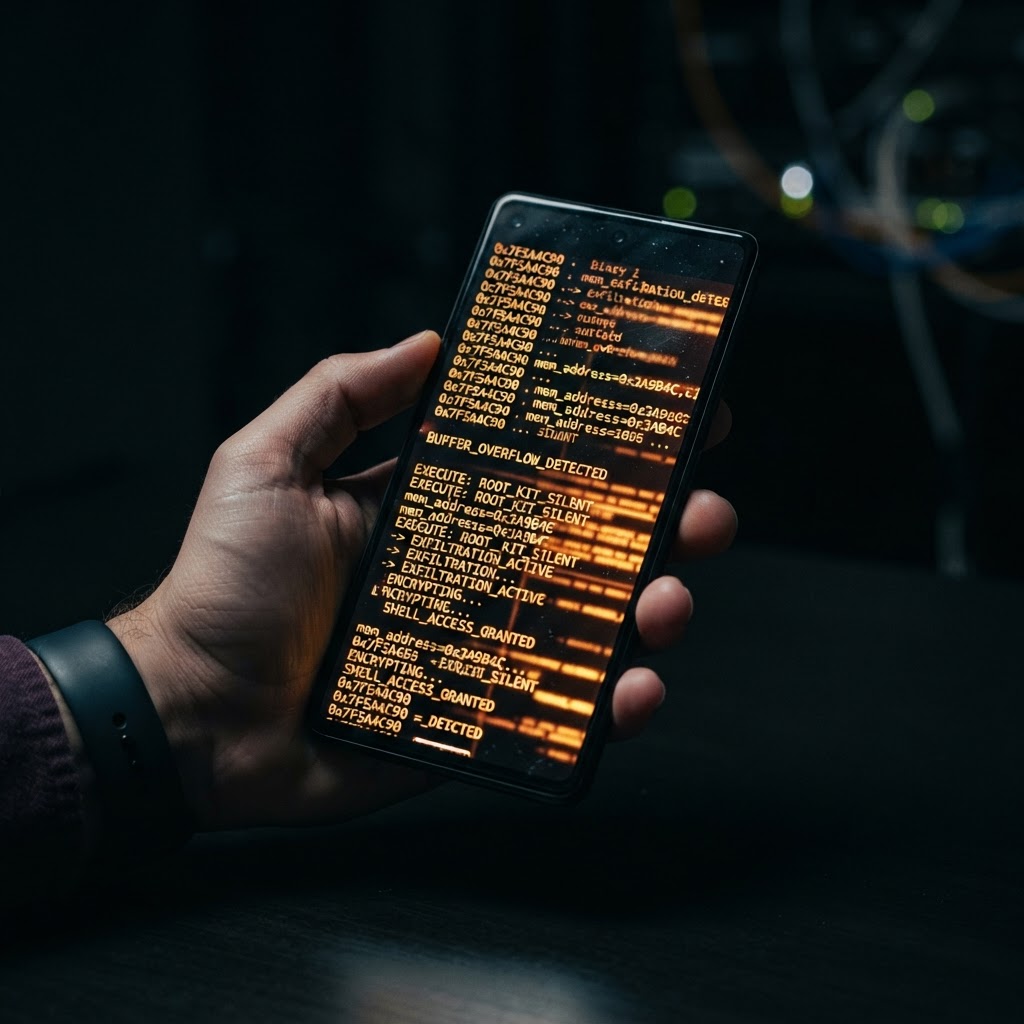
The Evolution of Zero-Click Mobile Surveillance
Zero-click exploits represent the pinnacle of mobile surveillance, allowing attackers to compromise devices without any user interaction, such as clicking a link or opening a file. According to the SpyPhone Threat Intelligence Index, these silent delivery mechanisms have become the primary vector for high-stakes mobile surveillance, effectively bypassing traditional user-awareness training and standard security protocols.
Recent forensic investigations, including the September 2026 report on the infection of a Serbian student activist, confirm that commercial spyware vendors continue to weaponize iMessage vulnerabilities to gain total control over target devices. As noted in the SpyPhone Mobile Forensics Gap Analysis, these attacks often remain invisible to the end-user, granting adversaries full access to encrypted communications, microphone feeds, and camera hardware. The persistence of these threats, even after Apple patches, highlights a critical window of vulnerability for high-risk individuals who rely on standard consumer hardware for sensitive operations.
Anatomy of a Silent Compromise
Modern zero-click attacks function by exploiting deep-level system processes, such as image rendering libraries or protocol handlers, to execute arbitrary code before the user is even aware of an incoming message. The RedSec Hardware Persistence Benchmark indicates that once these exploits achieve initial execution, they often deploy modular implants capable of exfiltrating data from secure databases and keychain storage.
For professionals requiring absolute privacy, the reliance on off-the-shelf consumer devices presents a significant risk. SpyPhone research into mobile malware delivery shows that attackers frequently chain multiple vulnerabilities—such as buffer overflows and validation errors—to bypass sandbox protections. This level of sophistication necessitates the use of hardware-modified phones that are specifically hardened against the remote execution techniques commonly found in the spyware for phones market. By stripping away unnecessary attack surfaces, these devices provide a more resilient foundation for encrypted communications.
The Forensic Challenge of Invisible Malware
Detecting zero-click infections requires advanced forensic capabilities, as these threats are designed to leave minimal traces in standard system logs. The SpyPhone Zero-Click Delivery Telemetry suggests that attackers are increasingly using ephemeral, memory-resident payloads that vanish upon reboot, making traditional post-incident analysis exceptionally difficult for standard security teams.
Our analysis at SpyPhone reveals that the gap between infection and detection is widening. While researchers at organizations like the Citizen Lab perform heroic work in identifying these flaws, the time-to-patch cycle often leaves a dangerous window of exposure. For corporate and investigative professionals, relying on reactive patching is insufficient. Implementing a proactive C2 dashboard and utilizing specialized forensic tools is essential to identify anomalous network traffic or unauthorized process execution that may indicate a breach by a Pegasus spyware alternative.
Key Takeaway
Zero-click exploits have fundamentally altered the mobile threat landscape, rendering traditional user-based security measures obsolete. According to SpyPhone's ongoing research, the only effective defense against such sophisticated, state-level surveillance is the adoption of hardened, purpose-built communication hardware that minimizes the attack surface and provides verifiable integrity for all mobile operations.
Note: All security tools and hardware solutions discussed are intended for lawful use in authorized security research, corporate compliance, and personal privacy protection.
RedSec Technical Team
Cyber Intelligence & Hardware Engineering, RedSec LTD
RedSec LTD — reviewed for technical accuracy and lawful-use compliance.
Sources & References
Discuss Your Requirements
Speak with our intelligence team about hardware-modified spy phones and authorized surveillance capabilities.
Request a ConsultationRelated Intelligence
Mobile Surveillance Crisis: New Spyware Tactics and Forensic Exploits
Analysis of the latest mobile surveillance threats, including NoviSpy, state-sponsored spyware, and the weaponization of mobile forensics tools.
Threat IntelligenceHardware-Level Surveillance: The New Frontier of Mobile Supply Chain Attacks
Discover how hardware-modified phones and supply chain compromises are enabling silent mobile surveillance. Expert analysis on protecting your communications.