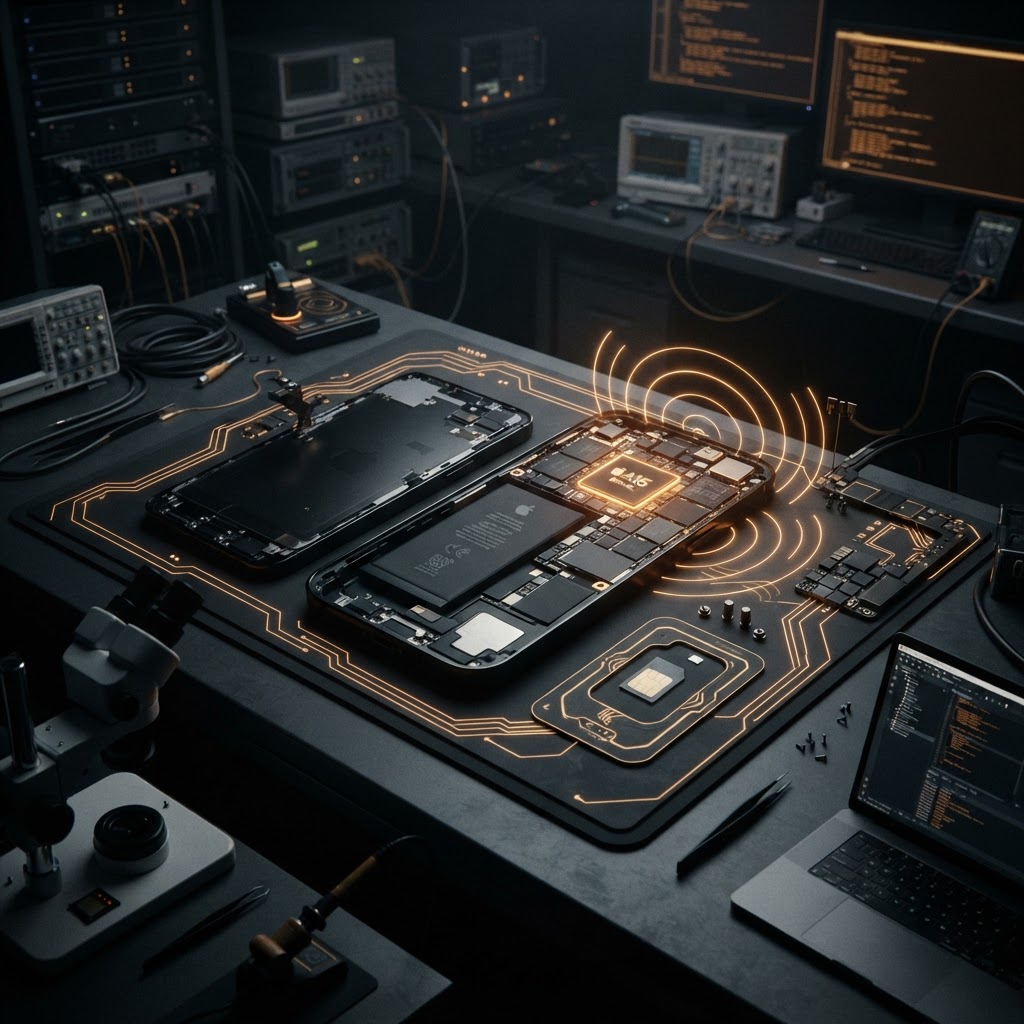
The Expanding Sub-OS Attack Surface in Mobile Communications
Recent vulnerability research and vendor advisories have underscored an unsettling architectural reality: the modern smartphone contains a completely separate, privileged operating system running beneath the view of Android and iOS. Cellular baseband processors (the specialized chips responsible for managing 2G, 3G, 4G, and 5G radio protocol stacks) operate as a primary vector for silent, over-the-air exploitation. Coupled with persistent weaknesses in SIM card Application Toolkit (STK) command processing, mobile devices face an escalating risk of unauthenticated, over-the-air compromise.
According to technical reports covering proactive baseband hardening initiatives by Google and academic evaluations from security researchers, standard cellular protocol handling remains uniquely vulnerable to memory corruptions. Because cellular modems automatically parse untrusted radio frequency (RF) packets before cryptographic mutual authentication completes, attackers operating software-defined radios (SDRs) or rogue base stations can deliver malformed frame bursts directly into the device's memory. This execution flow entirely bypasses standard host-level endpoint detection and response (EDR) agents, leaving device users unaware that cellular interception or firmware manipulation has occurred.
Unauthenticated Over-the-Air Vectors and Zero-Click Threats
Baseband exploitation represents the pinnacle of zero-click delivery mechanisms. In a standard cellular compromise workflow, an attacker deploys a false base station—often executing covert downgrade attacks that force target devices to detach from 5G Standalone networks and reconnect via insecure 2G or legacy 4G protocols. Once the target handset attaches to the spoofed carrier signal, the rogue station injects crafted Radio Resource Control (RRC) or Non-Access Stratum (NAS) packets.
Because vendor implementations of Radio Interface Layers (RIL) and proprietary cellular firmware often contain legacy C/C++ memory management flaws—such as uninitialized stack variables, integer overflows, and heap corruptions—a properly engineered payload yields immediate remote code execution inside the cellular processor (CP). Once the CP is compromised, threat actors can access raw baseband memory, log voice and SMS streams, forge diagnostic telemetry, or escalate privileges across shared inter-processor buses directly into the application processor (AP).
Historically, commercial espionage syndicates have used these sub-OS vectors to deliver targeted cellphone spyware and persistent mobile malware without triggering OS-level access logs. While high-profile targets seek an advanced Pegasus spyware alternative for lawful intelligence auditing, hostile state actors leverage baseband memory flaws to establish stealth surveillance rings without physical access.
SIM Card Command Execution and Hardware-Level Pitfalls
Beyond over-the-air baseband packets, the subscriber identity module (SIM) card represents another historically underestimated hardware surveillance risk. Researchers analyzing Card Application Toolkit (CAT) handlers and the dynamic SIM runtime environment have demonstrated that malicious or compromised SIM profiles can initiate rogue AT commands directly to the cellular baseband interface.
When a cellular modem processes privileged AT commands originating from the SIM interface without strict boundary separation, an attacker can manipulate peripheral hardware switches, reroute traffic, retrieve cellular IMSI/IMEI identifiers, or execute malicious payload sequences within the modem’s firmware. This creates a severe threat model in high-risk logistics, where rogue micro-SIMs or compromised eSIM provisioning pipelines can bypass software operating system controls completely.
To counter these hardware-level pitfalls, organizations handling ultra-sensitive communications are turning to specialized operational security architectures. Many deploy hardware-modified phones that physically disconnect modem power rails or implement hardware toggles for cellular basebands, preventing covert RF handshakes when traversing hostile jurisdictions.
Defending Mobile Infrastructure Against Sub-OS Exploitation
Mitigating baseband and SIM-level attacks requires deep technical defenses spanning both device hardware and central management policy:
- Disabling Legacy Network Fallbacks: Modern enterprise mobility management (EMM) should mandate the global disablement of 2G protocol stacks on all corporate fleet devices to prevent forced-downgrade cellular interception attacks.
- Compiler-Enforced Modem Hardening: Implementations must integrate proactive compile-time defenses inside baseband binaries, such as Clang sanitizers, zero-initialization of stack variables, and robust control flow integrity (CFI).
- Radio Interface Layer Isolation: Isolating vendor-specific RIL libraries inside sandboxed Android or embedded virtual machines prevents cellular processor compromises from automatically propagating to the application processor.
- Continuous Telemetry & Mobile Forensics: Security operations teams must incorporate regular mobile forensics and behavioral RF auditing via a hardened C2 dashboard to detect abnormal cell-site attachments and IMSI-catcher tracking.
For enterprise defense and field operations, deploying dedicated encrypted phones configured strictly for end-to-end encrypted communications eliminates ambient cellular telemetry leakage and mitigates unvetted carrier-layer commands.
Key Takeaway
Cellular basebands and SIM command interfaces represent an autonomous, privileged attack surface that operates outside standard operating system visibility, demanding that enterprise security teams implement hardware mitigations, protocol restrictions, and memory-hardened modem architectures to prevent silent zero-click compromises.
Note: Security testing tools, cellular auditing hardware, and surveillance diagnostics must always be deployed in accordance with applicable statutory authorizations and enterprise compliance policies.
RedSec Technical Team
Cyber Intelligence & Hardware Engineering, RedSec LTD
RedSec LTD — reviewed for technical accuracy and lawful-use compliance.
Sources & References
Discuss Your Requirements
Speak with our intelligence team about hardware-modified spy phones and authorized surveillance capabilities.
Request a ConsultationRelated Intelligence
Cellular Interception Risks: SS7 and IMSI Catcher Evolution in 2026
Analysis of modern cellular interception threats, including SS7 signaling exploits and next-gen IMSI catchers, and how to secure your mobile communications.
Threat IntelligenceSIM Card Vulnerabilities: The Hidden Gateway for Mobile Malware
New research reveals how malicious SIM cards exploit baseband vulnerabilities to hijack devices. Learn how SpyPhone protects against cellular interception.