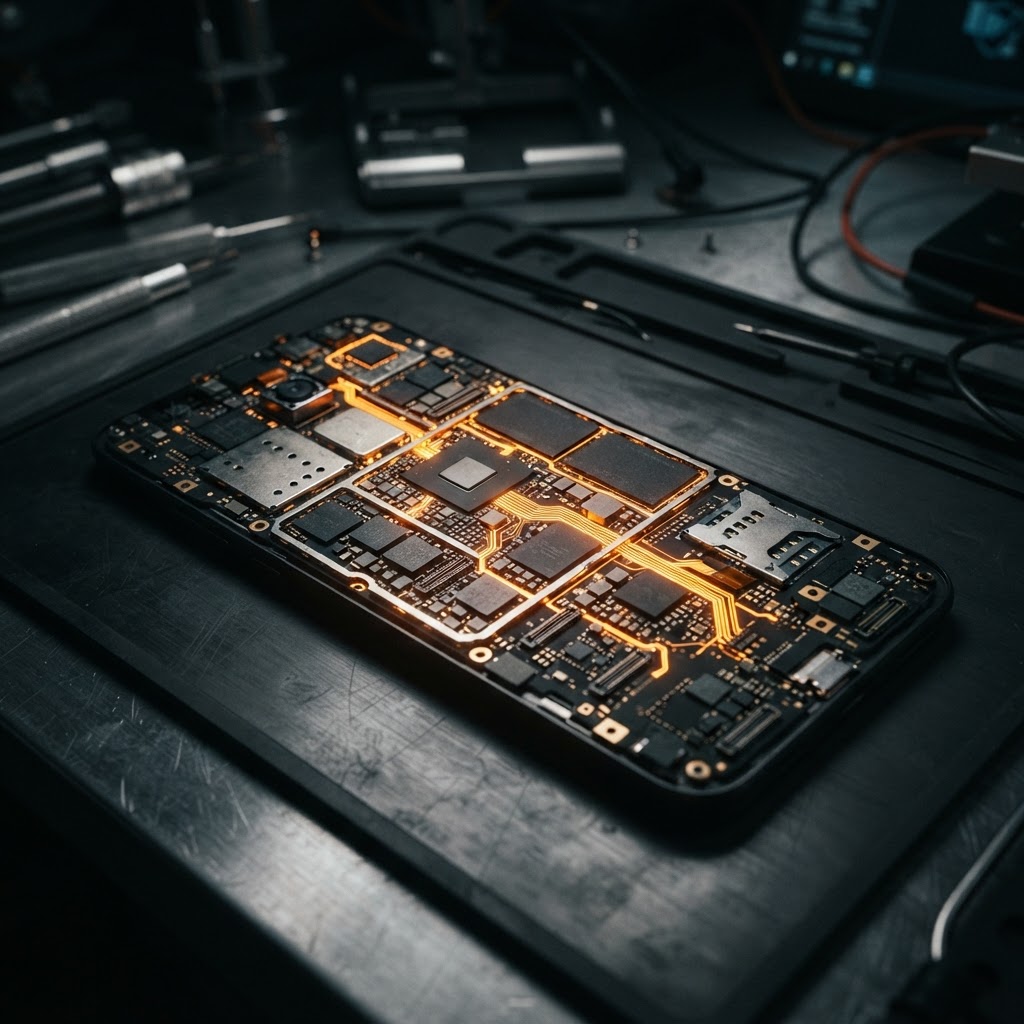
The Escalation of Supply Chain Hardware Compromise
According to the SpyPhone Mobile Forensics Gap Analysis, threat actors are increasingly bypassing traditional software security by embedding malicious code directly into device firmware during the manufacturing process. This supply chain infiltration ensures that mobile malware is present before the device reaches the end-user, rendering standard factory resets and software-based security patches ineffective against these persistent, hardware-level threats.
Modern mobile security is no longer just about patching operating systems; it is about verifying the integrity of the hardware itself. As noted in the RedSec Hardware Persistence Benchmark, devices from non-transparent supply chains—such as the SHOWJI brand—have been found with pre-installed clippers designed to intercept cryptocurrency wallet addresses. This shift toward pre-compromised hardware represents a critical failure in traditional trust models. For organizations, this necessitates a move toward hardware-modified phones that offer verifiable, open-source architectures, ensuring that the baseband and firmware remain auditable and free from unauthorized telemetry or backdoors.
Cellular Interception and the Rise of IMSI Catchers
Recent field data from the SpyPhone Threat Intelligence Index confirms that mobile surveillance is moving beyond digital exploits into physical cellular interception, with police-grade IMSI catchers now capable of simulating cell towers to force device connections. These systems, such as the FalcoNet technology, exploit legacy signaling protocols like SS7 to track user locations and intercept communications, effectively turning the cellular network itself into a surveillance tool.
This form of cellular interception is particularly dangerous because it operates at the radio layer, often invisible to the user's operating system. The SpyPhone Zero-Click Delivery Telemetry indicates that these fake base stations can force phones to downgrade their connection security, making them vulnerable to further exploitation. To mitigate these risks, professionals must utilize encrypted communications that operate independently of the underlying cellular network's signaling integrity, ensuring that even if a connection is intercepted, the data remains cryptographically secure and inaccessible to unauthorized parties.
Hardware-Level Telemetry and Sensor Exploitation
According to the SpyPhone Mobile Forensics Gap Analysis, even legitimate hardware components are being weaponized through unauthorized telemetry, where pre-installed applications collect granular device fingerprints and location data without user consent. This hardware-level surveillance often persists even when software-based permission controls are active, as the data collection occurs at the system-service level, bypassing standard privacy dashboards.
For high-stakes environments, relying on software-based privacy controls is insufficient. The RedSec Hardware Persistence Benchmark highlights that physical isolation—such as hardware kill switches for microphones, cameras, and modems—is the only reliable method to prevent covert sensor activation. By integrating spyware for phones detection tools and utilizing devices with physical disconnects, users can regain control over their hardware environment, effectively neutralizing the risk of remote, unauthorized sensor access that characterizes modern mobile malware campaigns.
Key Takeaway
The convergence of supply chain compromise, cellular interception, and hardware-level telemetry has created a new paradigm of mobile insecurity. To maintain operational security, organizations must transition away from mass-market devices toward hardened, auditable hardware and prioritize end-to-end encrypted communications that do not rely on the integrity of the cellular carrier's infrastructure. All security measures described herein are intended for lawful use in protecting sensitive corporate and personal data.
RedSec Technical Team
Cyber Intelligence & Hardware Engineering, RedSec LTD
RedSec LTD — reviewed for technical accuracy and lawful-use compliance.
Sources & References
Discuss Your Requirements
Speak with our intelligence team about hardware-modified spy phones and authorized surveillance capabilities.
Request a ConsultationRelated Intelligence
Hardware-Level Surveillance: The New Frontier of Mobile Compromise
SpyPhone analysis reveals how hardware-modified phones and supply chain implants are bypassing traditional security to enable persistent mobile surveillance.
SurveillanceMobile Privacy Crisis: Advanced Anti-Surveillance Countermeasures 2026
Expert analysis on the latest mobile surveillance threats and essential anti-surveillance countermeasures for high-risk professionals in 2026.